Johann Meintjes shares his experience of Ellis Park, Loftus and Kings Park as a wheelchair photographer
Written by Johann Meintjes with main photo by Christiaan Kotze
As a sports photographer who uses a wheelchair, I have learned that every stadium presents its own challenges. While accessibility has improved at many venues, my experience covering the 2026 Nations Championship at Emirates Airline Park (Ellis Park) highlighted both the obstacles that still exist and the willingness of people to make a difference.
Emirates Airline Park
The day began on a positive note. The media parking was excellent with a secure parking bay located inside the designated media area. Security personnel were on hand should assistance be required, although I was fortunate to have fellow photographers helping me unload my camera equipment from my vehicle.
The first accessibility challenge came almost immediately with the entrance to the media centre reached by two large steps, creating a significant obstacle for a wheelchair user.
Fortunately, the security officer on duty was quick to offer assistance. Inside the media centre, the South African Rugby Union (SARU) officials welcomed photographers and members of the media with professionalism and friendliness.
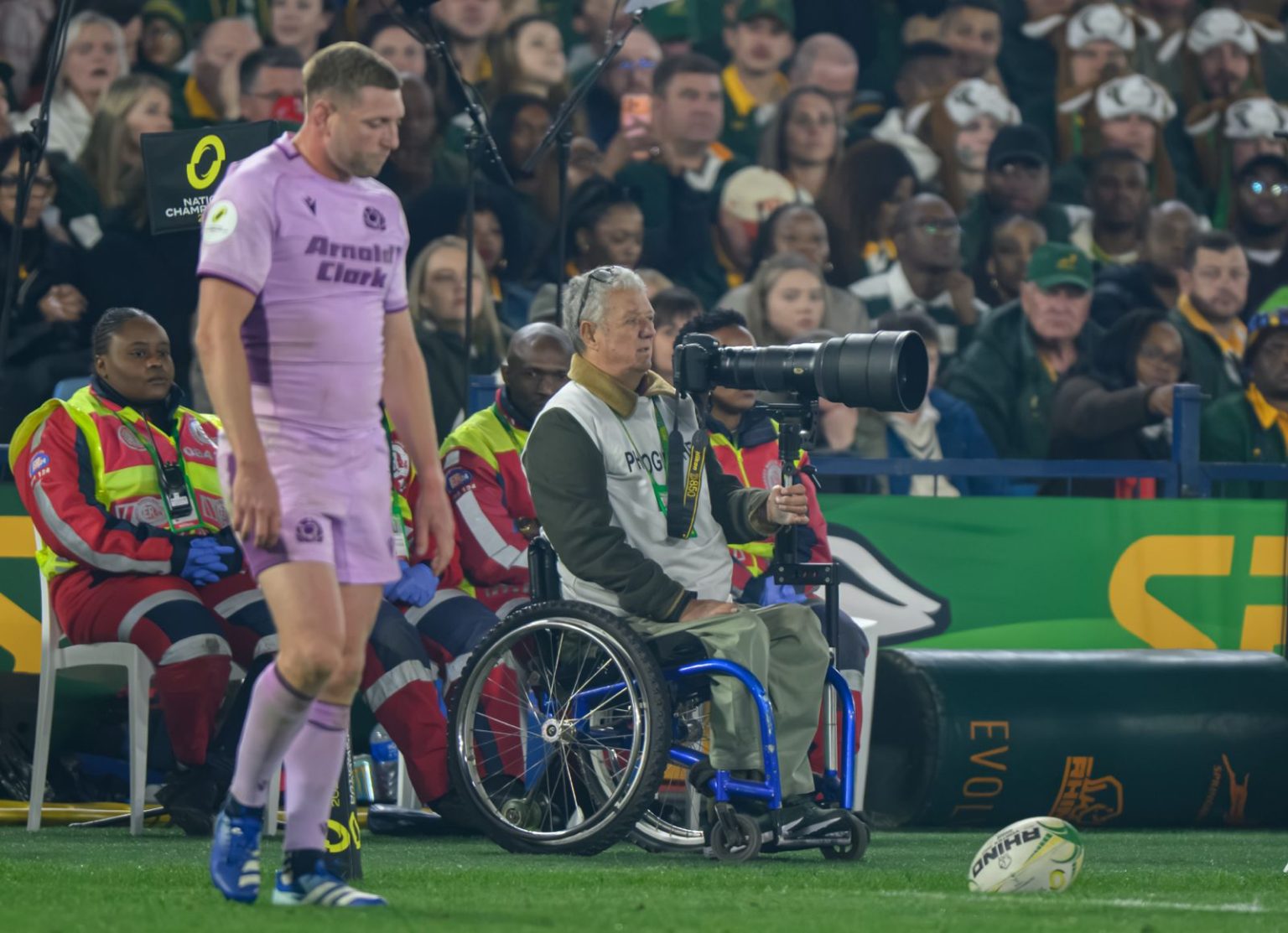
Getting to the field presented another hurdle. The usual route to the pitch involves a very steep ramp that rugby players use when walking from the changing rooms to the field. Recognising the difficulty, SARU officials immediately found a solution and safely assisted me down the ramp.
Once on the field, another problem became apparent. The pitch-side advertising boards are too high for a photographer shooting from wheelchair height, severely restricting photographic opportunities. Once again, the SARU team responded positively. They arranged for me to work from alongside the reserve players, providing a much better position from which to capture the action.
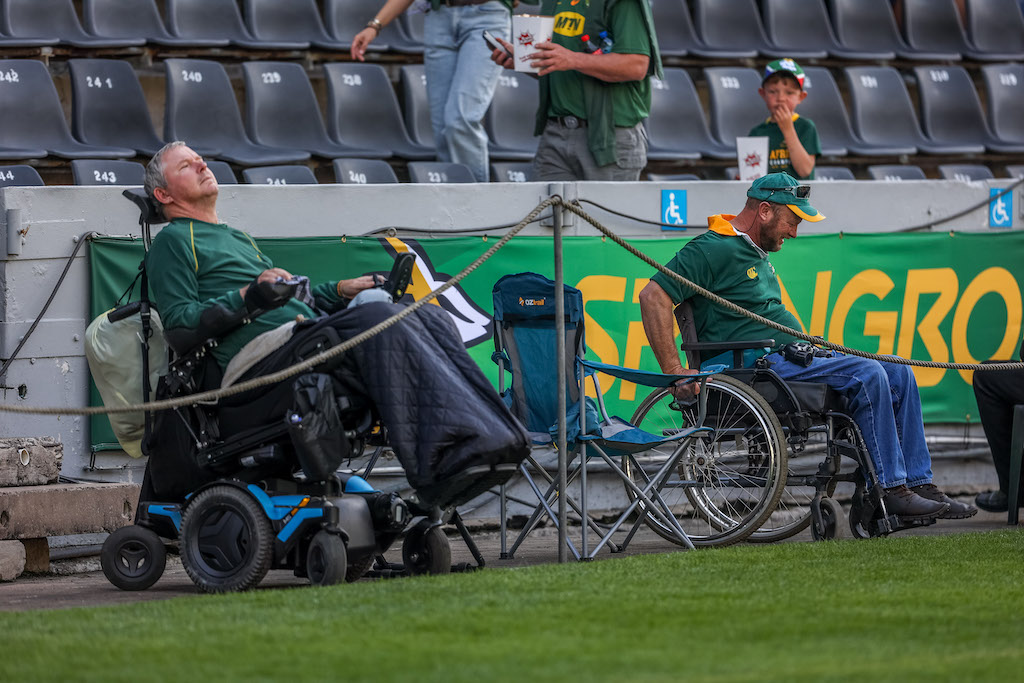
At the end of the match, the steep climb back to the media centre remained a challenge. Thankfully, several ball boys willingly pushed my wheelchair up the long incline, ensuring I could return safely after the final whistle.
I would like to extend my sincere thanks to Mohrike Muller, media operations coordinator from SARU, whose kindness, professionalism and determination to find practical solutions made the day both productive and enjoyable. Her willingness to help demonstrated how much difference one person can make to the experience of a media professional with a disability.
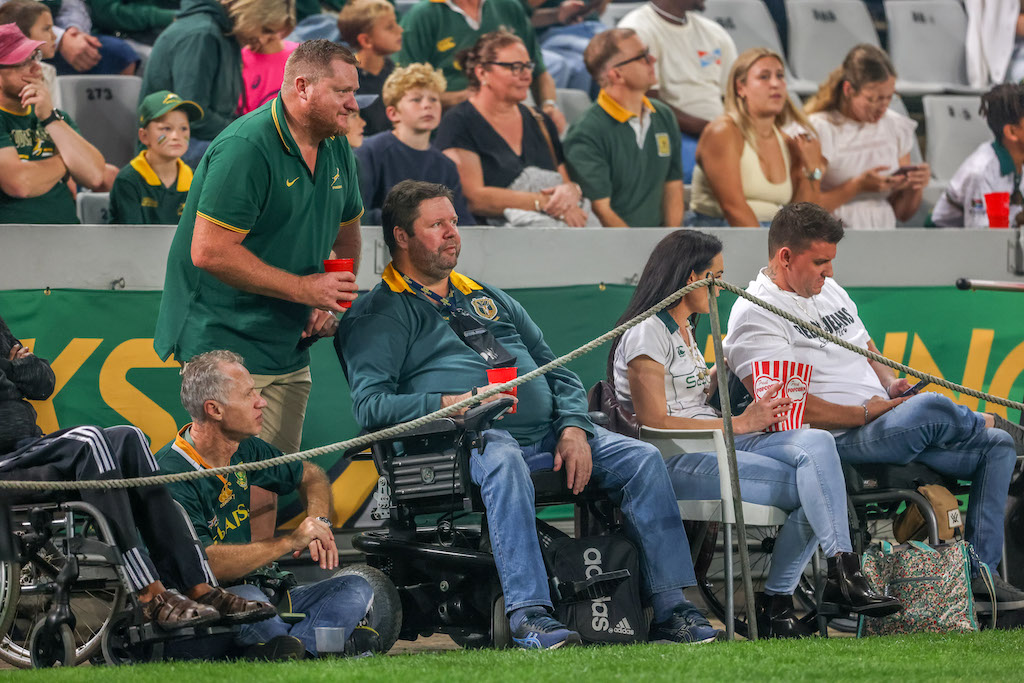
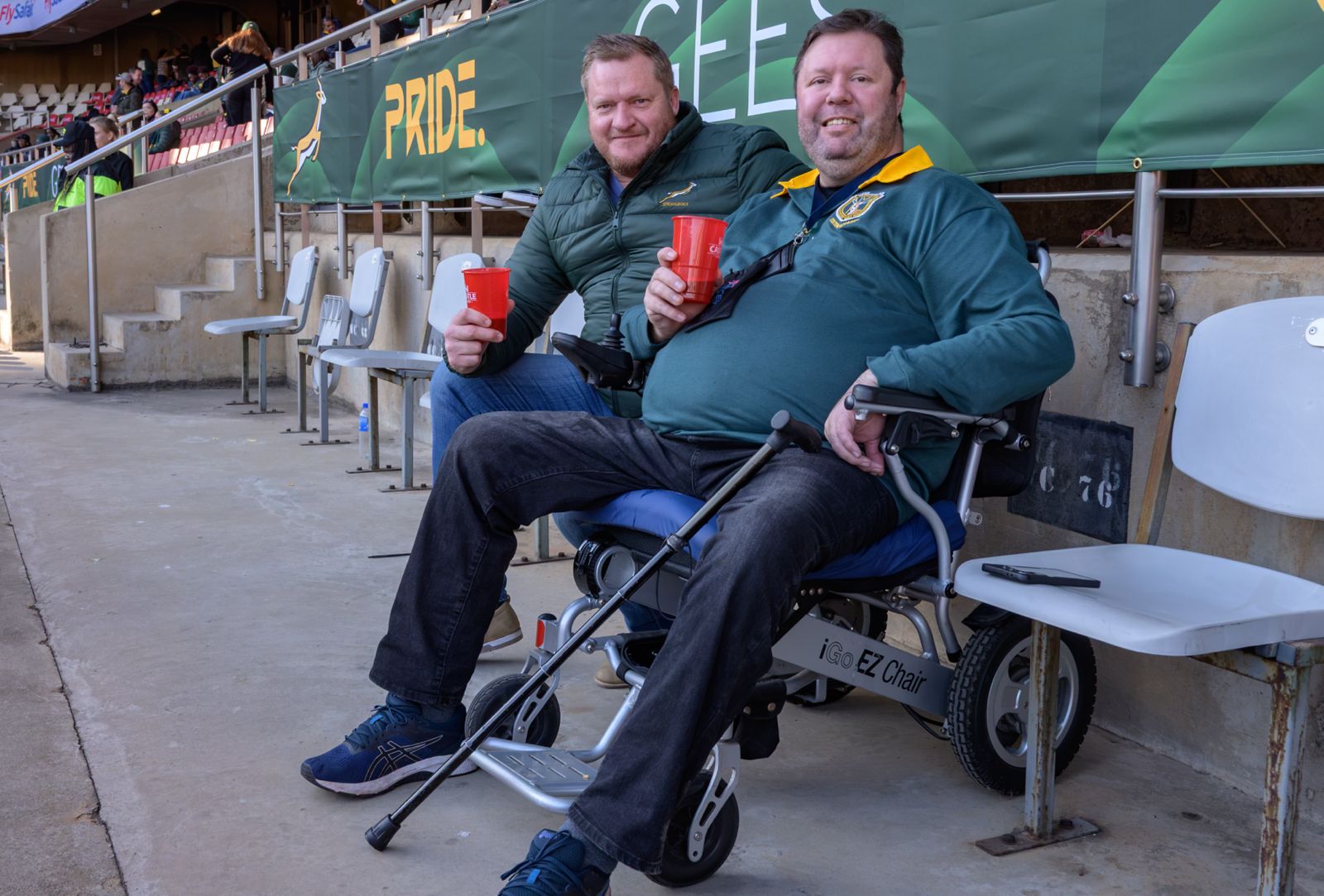
While my experience as a photographer highlighted several accessibility issues behind the scenes, spectators using wheelchairs are better accommodated. Emirates Airline Park offers excellent accessible parking, and the North and East stands provide approximately 75 wheelchair spaces, together with seating for accompanying companions.
Accessibility, however, should extend beyond spectator areas. Media facilities should also be designed to accommodate photographers and journalists with disabilities, allowing them to work independently and with dignity.
Looking ahead, Nyaniso Sam from Lions Media and I will be exploring the possibility of adapting one of the stadium’s suites into an accessible workspace for wheelchair users.
Such an initiative would represent another positive step towards making Emirates Airline Park a venue where everyone (whether spectator, photographer or journalist) can enjoy and perform their role without unnecessary barriers.
The Nations Championship showcased world- class rugby. With continued improvements in accessibility, Emirates Airline Park can also become a leader in ensuring that every member of the rugby community has equal opportunities to experience the game.
Loftus Versfeld
For my visit to Loftus Versfeld, Mohrike arranged an accessible parking permit for me, which allowed me to park on the servitude road between Loftus Versfeld and Loftus Park. It made a significant difference before I had even unpacked my camera equipment. I never take for granted the support I receive from the SARU.
The security personnel were welcoming and immediately offered assistance, helping me unload both my wheelchair and photographic gear from the vehicle. Small gestures like these make the start of a long working day much easier.
The difference between Emirates Airline Park and Loftus Versfeld from an accessibility perspective is remarkable. From the moment I entered the stadium, the journey to the media centre was smooth and well designed.
A lift provided access to Level 1, followed by a ramp leading directly into the media centre, making the entire route fully wheelchair accessible. Returning from the media centre to pitch level was equally straightforward, allowing me to move efficiently between work areas without unnecessary obstacles.
Photographing the match presented one challenge. The advertising boards surrounding the field are relatively high, making it difficult for a photographer working from a wheelchair to capture clear action shots from behind them.
Recognising this, SARU officials kindly allowed me to work from the field alongside the substitutes’ bench. This position not only solved the visibility issue, but also provided an outstanding angle from which to capture the intensity and emotion of the game.
Loftus Versfeld also offers dedicated facilities for spectators who use wheelchairs. Wheelchair-accessible seating is available in the front row of the Northern pavilion, providing an excellent view of the field.
In addition, the stadium includes an accessible suite on Level 1 of the Northern pavilion. Unfortunately, during this test match, the suite was allocated for general public use, leaving wheelchair spectators with access only to the ground-level viewing area.
While this was disappointing, my overall experience at Loftus Versfeld demonstrated that thoughtful planning, accessible infrastructure, and a willingness from stadium staff to accommodate individual needs can make a major sporting event far more inclusive.
Hollywoodbets Kings Park
I have noticed an interesting change over the years. When fellow photographers first encounter a colleague working from a wheelchair, they quickly begin to appreciate the practical challenges that people with disabilities face in environments that many others take for granted.
Unfortunately, I was unable to attend the Springboks vs Wales Test at Hollywoodbets Kings Park in Durban. I therefore asked my colleague, Charmain Visser, to assess the stadium’s accessibility, focusing on accessible parking, the media facilities, access to the playing field, and the experience for spectators using wheelchairs. The findings were encouraging.
Parking for visitors with disabilities at Kings Park was well organised and conveniently located. However, as with Emirates Airline Park, the entrance to the media room where photographers collect their bibs is not fully wheelchair accessible. A small step at the entrance creates an unnecessary obstacle for wheelchair users.
Once inside the stadium, the experience improved significantly. The lifts to the main media centre on Level 4 were fully accessible, allowing wheelchair users to move around with ease. Access from the media area onto the rugby field was equally straightforward, making it possible for photographers with disabilities to work alongside their colleagues without difficulty.
The facilities for spectators using wheelchairs were equally impressive. Dedicated viewing areas are located alongside the field, providing excellent sightlines and easy access, demonstrating that accessibility for fans has been carefully considered.
South Africa’s major rugby venues, it appears that Emirates Airline Park remains the only stadium where the media facilities require meaningful upgrades to accommodate photographers and journalists who use wheelchairs. In contrast, parking and spectator accessibility at all three major stadiums are of a high standard.
One further improvement could make these venues even more inclusive: The introduction of a dedicated hospitality suite designed specifically for guests with disabilities. Such a space would ensure that supporters, sponsors and media professionals with disabilities can enjoy the same premium match-day experience as everyone else.
South African rugby has made significant strides in improving accessibility for supporters. With a few targeted upgrades to media facilities, the game can become even more inclusive for everyone who wants to be part of the action.