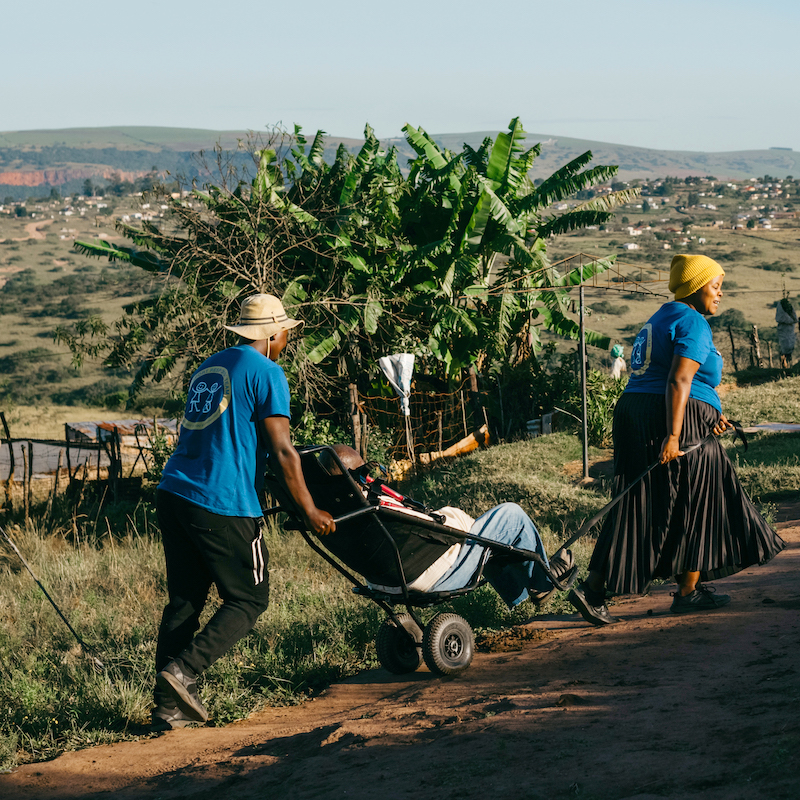
In collaboration with Susan Holmes, ShonaquipSE is introducing the Off-road Transporter to rural communities across South Africa
Sometimes, meaningful innovation doesn’t begin in a laboratory or a design studio. Sometimes it begins with a moment that is impossible to forget. For Susan Holmes, that moment came more than a decade ago while travelling through South Africa’s Tugela Valley.
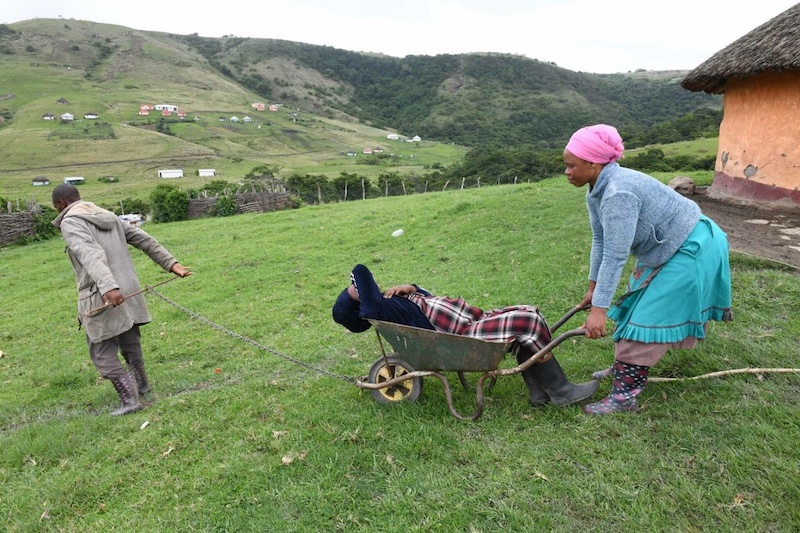
She witnessed an all-too-familiar reality in many rural communities. A person with a disability being transported in a wheelbarrow because there simply wasn’t another way to navigate the terrain.
“It stayed with me. I knew there had to be a better way,” she recalls. What Susan saw was not simply a transport problem. It was a reminder that for many people with disabilities, the greatest barrier is often not the assistive device itself, but everything that happens before and after it.
A wheelchair may restore mobility and independence. A supportive seating system may improve comfort and improve function. Yet, if the route from home to school is a muddy footpath, if the journey to a clinic crosses loose gravel and steep inclines, or if public transport is inaccessible, the promise these technologies provide remain frustratingly out of reach.
This is what many in the disability sector refer to as the first- and last-mile of inclusion. While the term “last mile” is often used in transport planning to describe the final stretch of a journey, for the majority of people with disabilities the journey begins at their own front door.
It is those first few hundred metres that often determine whether someone can attend school, access healthcare, earn an income or participate in community life.
For Susan, the answer was not to look away. She began designing a practical transport solution that could cope with the realities of rural South Africa. The first prototype proved there was value in the concept, but it also revealed important lessons.
Heavy wheels struggled in muddy conditions, the design was difficult to store, and improvements were needed before it could truly serve the communities it was intended for.
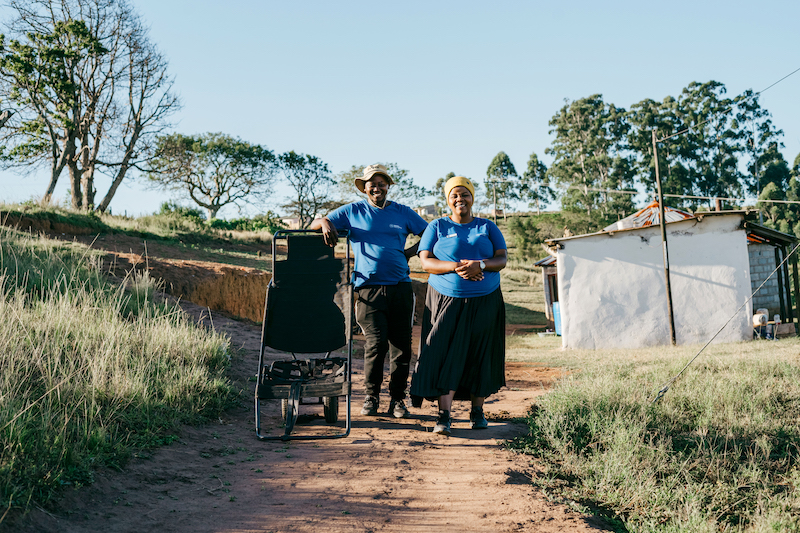
For many ideas, this might have been the end of the journey. Fortunately, years later, she discovered that Shonaquip Social Enterprise (ShonaquipSE) had already developed a similar, effective design. There was an opportunity for their shared thinking and passion for unblocking barriers to inclusion to change lives. This brought to life the Off- Road Transporter.
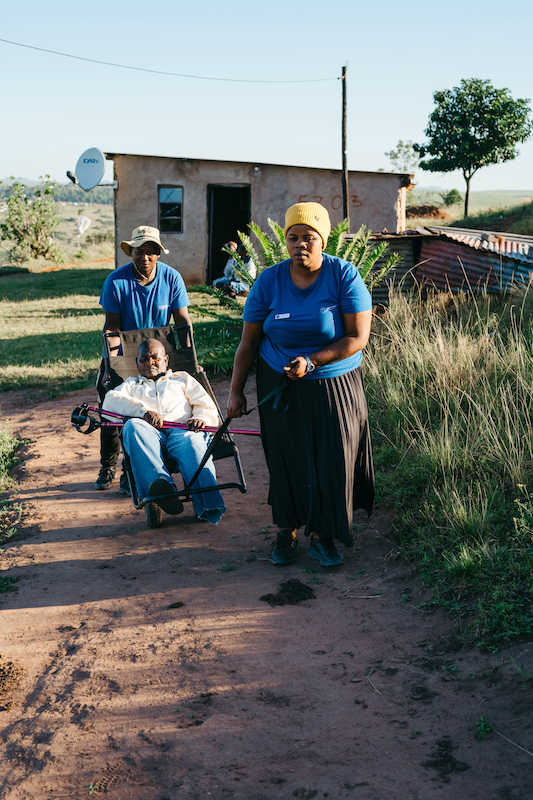
“One of the greatest lessons has been recognising that a device on its own is never enough,” says Susan. Working alongside ShonaquipSE, Susan found renewed purpose within a broader conversation about how to rethink communities access, mobility, participation and inclusion.
“Real inclusion happens when people can actually use technology to reach the places that matter in their lives,” she shares. This philosophy shaped the work that ShonaquipSE pursues.
For decades, the organisation has worked alongside assistive technology users, families, innovators, clinicians, and communities to develop solutions that respond to the realities of everyday life.
Rather than asking whether a product simply works, the team asks a more important question: Can this solution solve the problem where the user lives and needs it?
Across South Africa, the answer depends on far more than engineering. Rural communities often contend with long distances, uneven terrain, seasonal flooding, and limited transport infrastructure. These environmental realities influence whether someone can get to school, reach a healthcare facility, visit family, their church or simply participate in community life.
Designing for those realities requires listening first. It also requires recognising that the people who use assistive technology are experts in their own experiences. Their knowledge shapes better solutions, stronger communities, and more sustainable systems.
This innovation is viewed as only one part of a much larger picture. ShonaquipSE is now working with partners to explore how the Off-Road Transporter can contribute to a community-driven Micro-Mobility as a service model.
This would generate opportunities for local skills development, employment, and community ownership. It is an approach that recognises inclusion must be designed and built together with community when planning policies, processes and products.
The same thinking is becoming increasingly important in disaster preparedness and resilience planning. The United Nations Office for Disaster Risk Reduction has repeatedly highlighted that people with disabilities are too often excluded from emergency planning, transport systems and evacuation strategies.
When accessibility is overlooked, exclusion becomes part of the crisis itself. Building resilient communities therefore begins long before disasters occur. It begins by ensuring that people with disabilities can move, participate and contribute every day.
The Off-Road Transporter has become part of a growing movement that asks communities to think differently about mobility, dignity and participation.