Some wealth is intangible and infinitely more important
What will your life’s work be worth? Not what it will pay you. Not what title it will give you. Not what car it will buy or house it will build. What will your life’s work be worth to another human being?
What will it contribute to the occupational economy of South Africa; to a society where every person has the opportunity to live, work, participate, contribute and belong?
Very few people become wealthy by becoming occupational therapists. If financial wealth is your measure of success, perhaps you chose the wrong profession. But if success is measured by the lives you change, the hope you restore, the dignity you return and the independence you help reclaim, then you have chosen one of the richest professions on earth.
Occupational therapy is ultimately about something greater than a clinical intervention. It is about life. Every day, somewhere, someone’s life changes in an instant. A spinal cord injury. A stroke. A traumatic brain injury. An amputation. A devastating illness or accident.
The familiar can disappear. Work becomes uncertain. Relationships change. Independence can feel like a distant memory. Beneath every clinical assessment is a question rarely written on the form: “Will I still be able to have a life?”
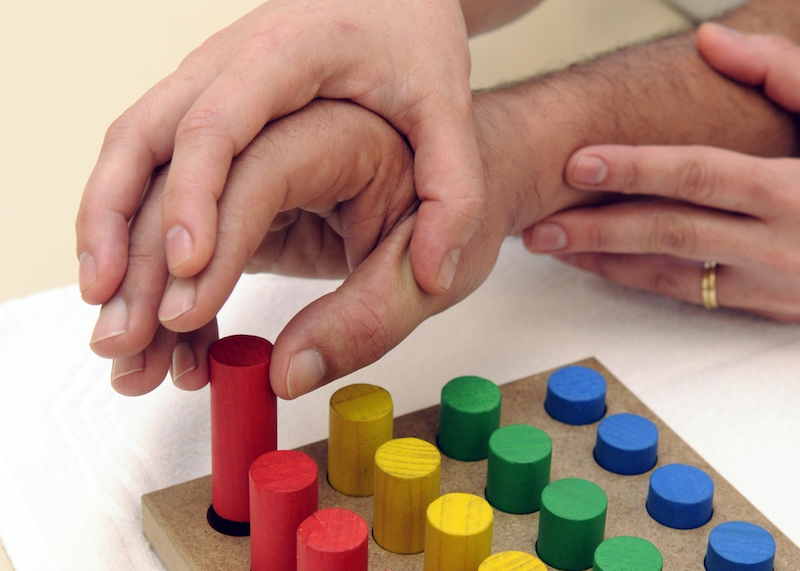
Then that person meets an occupational therapist. Not someone who can erase the injury or promise that everything will return to the way it was. Rather someone who can sit beside them and say: “Let’s discover what is still possible.” That is the extraordinary power of occupational therapy.
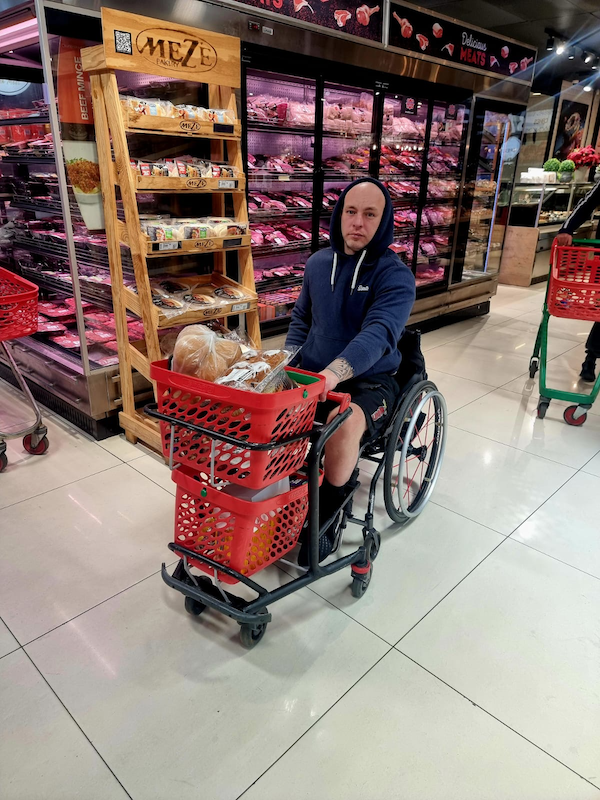
The occupational therapist sees beyond the diagnosis, the wheelchair, the impaired hand and the inaccessible environment. They see the mother who still wants to mother, the young person who wants to study, the worker who wants to contribute, the entrepreneur who wants to build, and the human being who still wants to belong.
We describe occupational therapy through assessment, rehabilitation, assistive technology, functional training, environmental modification and evidence-based practice. These are important, but they are not the destination. They are the vehicle. The destination is participation in life. They do not teach someone to dress simply because dressing is a functional activity. We do it because dressing may mean getting out of bed, going to work, attending a family gathering or feeling like oneself again.
They do not teach a transfer merely because it is a clinical goal. They do it because that movement may be the first step towards independence. They adapt a cooking utensil because perhaps that person wants to cook for their children again. This is the magic of occupation.
Eating, bathing, working, parenting, studying, creating, driving, cooking, socialising, loving and dreaming give our lives structure, identity and meaning. When disability disrupts those occupations, the loss can be profound. The occupational therapist’s role is to help a person rediscover possibility.
I have had a spinal cord injury for 42 years. That experience has taught me something no textbook could adequately explain. People may forget the equipment, the assessment or even the exercises, but they will never forget the occupational therapist who helped them believe in themselves again. They remember the person who did not see disability as an ending, but saw the possibility.
A little more confidence. A little more independence. A renewed sense of purpose. These may not appear in a discharge summary, but they are outcomes, and they matter. This is why clinical practice can be one of the most powerful vehicles for disability inclusion. Every assessment can restore dignity. Every intervention can unlock participation. Every conversation can challenge assumptions.
Disability inclusion does not begin and end with legislation. It happens in clinics, homes, workplaces, schools, public transport and communities. It happens when we stop asking only, “What is wrong with this person?”, and start asking, “What is preventing this person from participating and what can we change?”.
In South Africa, with its profound social and economic inequalities, this responsibility is even greater. Inclusion is about creating the conditions in which people can contribute, create, earn, care, lead and belong.
To students entering this profession, the academics teaching them and the clinicians who have spent years doing this work, remember what you have chosen: A profession at the intersection of health, humanity and possibility. You have chosen to work in the space between what a person can no longer do and what they might still become. You have chosen to help people reclaim not only function, but identity, independence as well as dignity, participation and belonging.
So, ask yourself again: “What will your life’s work be worth?” At the end of your career, perhaps your greatest wealth will not be found in your bank account. It will be found in the lives you touched. In the people who returned to work. In the families who found hope. In the individuals who discovered that disability had not taken away their future.
The true currency of occupational therapy is not money. It is human possibility. That is why occupational therapy is one of the richest professions on earth.