Neglecting footcare can result in some expensive, time-consuming treatments for the various foot conditions
In the summer, we swap socks and shoes for sandals, flip flops or bare feet. Our feet are more visible – ideal for closer inspection! To help you take full advantage, we look at general footcare and two common foot afflictions that go unnoticed among people with lower body paralysis namely, ingrown toenails and fungal infections. If you struggle with blood circulation, we recommend that you visit a doctor. For more information on Sausage Feet, read the Overt Consequences of SCI booklet on the Rolling Inspiration website.
To keep your feet healthy, you need to regularly perform toenail care, skincare and check your footwear:
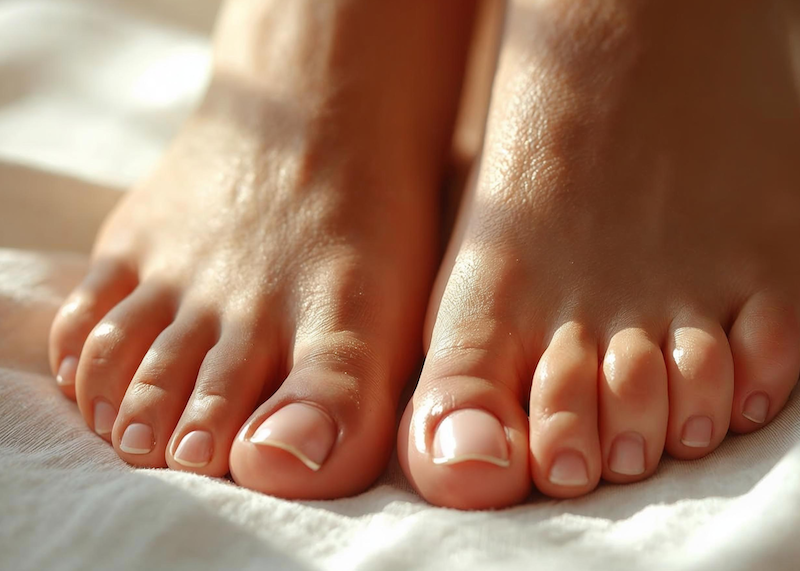
Toenail care: Clip and file your toenails regularly. Keep them at a comfortable length – just below the tip of the toe. Clippers or nail scissors can be used. For filing, emery boards or a steel nailfile are both suitable. When cutting your toenails, follow the contour of the toe. Do not cut into the corners of the nail. Rather file off sharp points.
Regular filing (once a week) is a safer option for persons with no feeling in their feet. Cutting is easier after washing when the nails are softer. Filing will require a hard nails thus it is best done before washing.
If cutting causes a nail to bleed, rinse with warm water, apply pressure with cotton wool or a tissue until the bleeding stops. Then apply a plaster if required. If the wound is not healed after 48 hours, consult a doctor.
Skincare: Basic foot skincare requires keeping your feet clean and dry, especially between the toes. After washing your feet, make a point of drying between your toes. This is the best, proactive way of preventing infections such as athlete’s foot. It also forces you to inspect your toes and feet.
Keep your feet comfortable. Hot, sweaty feet are more prone to infections while cold feet can compromise circulation. After washing and drying, moisturise your feet with a foot cream that contains urea as the main ingredient. Avoid apply between the toes. This may be done daily or less frequently depending on the state of the skin.
Check for cracks in the skin and signs of infection such as redness, pus and areas of “weeping”, blisters and peeling skin. If need be, dead skin can be removed while the skin is dry using a foot file or a pumice stone. Contact your podiatrist or doctor if you are concerned about fungal infections, ingrown toenails or sores that do not heal.
Footwear: Shoes should be comfortable, well-fitting and in good condition. If you suffer from sausage feet, it may be wise to swap to a larger shoe size or even remove the inner sole to increase the inner space. Always go for broader shoes with lots of toe space and make sure the shoes are made from material
Ingrown toenail
An ingrown toenail is where the nail grows into the adjacent skin. This causes discomfort and pain; however, it can go unnoticed among people with reduced or no sensation in their feet. Careful inspection of toes for signs of ingrowing nails is therefore a must.
It can occur in any toe, but is most common in the big toe. Check for a nail growing or curling into the flesh, redness and swelling, and, in advance cases, pus oozing from the toe. The pus is a sign of infection, which might also make you feel hot and shivery.
Causes of ingrown toenails include cutting the nail incorrectly, hot sweaty feet, tightly fitting shoes or socks, an injury to the toe or a nail that grows out of shape. It can be prevented by cutting the nails straight across and not into the corners, keeping your feet clean, wearing comfortable shoes with lots of toe space and not cutting your nails too short.
You can manage ingrown toenails by soaking the foot in warm, salty water to soften the skin around the nail and reduce the chance of infection. Dry your feet thoroughly afterwards. Do not cut the nail. Let it grow out. Wear soft, comfortable shoes with lots of toe space. Consult your doctor if the home treatment does not work, or the toe becomes hot, swollen and pussy, and if you feel feverish.
If you are a diabetic with an ingrown toenail, consult your doctor immediately as it can complicate rapidly. Your doctor will treat the infected toe with antibiotics. They may cut away part of the nail or remove the entire nail. You might also be referred to a podiatrist who will perform the required procedure.
Fungal infections to the foot
The two major types of fungal infections of the foot are Tinea pedis (Athlete’s Foot) and Onychomycosis, a fungal infection of the toenail. These often result from sweaty feet, high humidity, ill-fitting socks or shoes with poor breathability, and frequently visiting public facilities such as gyms, public swimming pools and public showers. Diabetics need to take particularly care as they are more susceptible to complications.
Athlete’s Foot: Mostly it presents as an itchy, peeling skin between the toes but may include the sole. It can become blisters and be somewhat smelly. A topical anti-fungal cream will clear up the infection within a week or two, but severe infections may take up to four weeks to clear. Continued exposure to high- risk areas (like a gym) will require Tolnaftate powder to prevent future infections.
Onychomycosis: The infection includes a white or yellow streak or white spots on the nail, thickened or lifting nails, brown discoloration, splitting or destruction of the nail, or a build- up of debris below the nail. Onychomycosis can affect one nail or multiple nails. The big and little toes (first and fifth) are the most commonly affected.
Treating Onychomycosis takes six or more months to clear using a medicinal nail lacquer or cream prescribed by a doctor. If topical treatments fail, you may be prescribe anti-fungal tablets, which work faster and more effectively, but have side effects. Alternatively, laser therapy by a podiatrist takes two or three sessions. Treatment of Onychomycosis is expensive and requires discipline.
Just because we cannot use or even feel our feet, it does not mean we can neglect them. Foot problems left unattended can become the cause of much misery, which can in turn become very time consuming and expensive to manage.