Palliative care is highly individualised, but these general guidelines can help you care for your loved one, and survive this challenging time
Caring for a person with a mobility impairment at home is challenging at the best of times. Palliative, end-of-life care, is even more challenging. For some the end comes abruptly, even unexpectedly, and may be a blessing in disguise. For many, the process is prolonged.
There are phases of curative care and the restoration of bodily functions, such as maintaining renal or cardiac function. As the heart, lungs and kidneys begin to fail, the focus changes to palliative support; to make the person as comfortable as possible while waiting for the end.
This more often (and preferably) takes place at home, in the care of a loved one who took up the role of caregiver with or without support from family and friends. For such self-appointed caregivers, this is a time of intense emotional heartache, stress, physical challenges and sleep-disturbed nights, which leaves the caregiver washed out and drained.
For such caregivers, this is usually a first exposure to the uncertainty of “am I doing the right thing?”, which also takes its toll.
The process of terminal care is highly individualised, and there is no “one-size-fits- all” protocol for caring. However, here are a few general guidelines in caring for the patient and surviving as the carer.
Quality-of-life focused
The critical role is to keep the patient safe and well cared for at home to prevent avoidable emergency department visits and hospitalisation.
If a situation arises where a visit to a doctor or an emergency department is considered, family carers should ask themselves three questions: “Will the outcome improve the quality of the patient’s remaining life?”; “Will the outcome merely prolong the remaining life (and suffering) of the patient?”; and “Will the outcome of the visit actually change the course of events?”.
The focus of the answers to these questions should be: “What course of action will maintain or enhance the quality of the patient’s present life best?”.
Enhancing quality of life usually revolves around pain management and comfortable breathing, but infections such as urinary tract infections and pneumonia must also be considered.
A phone call to your general practitioner (GP) for advice is a good first consideration. There are also GPs who specialise in frail and terminal care who do home visits. Many medical aids fund home nursing care in lieu of hospital care. They can all be sources of advice in decision making.
Contracting a reputable caregiver company to take care of the physical aspects of caring will relieve much of the burden for the family carer, leaving them to focus on the loving and empathy needs of the terminal patient.
Professional carers know how to manage bladder and bowel needs, how to assist with fluid and food intake and how to turn the patient in bed. All the things that a novice family carer struggles with.
Tips for emotional care
Chat to the patient about everyday events, the doings of family, friends and children. Be yourself, even if it is hard. Steer clear of niceties and platitudes, they are usually not appreciated. Pastoral care can be of great comfort to both the patient and the carer.
When the patient becomes agitated, music is a great comforter. Select music that the patient loves and play it softly.
WhatsApp voice notes from family and friends, and particularly from children, are an absolute winner. I have personal experience on how it perks up the emotions of very frail persons in the end stage of life.
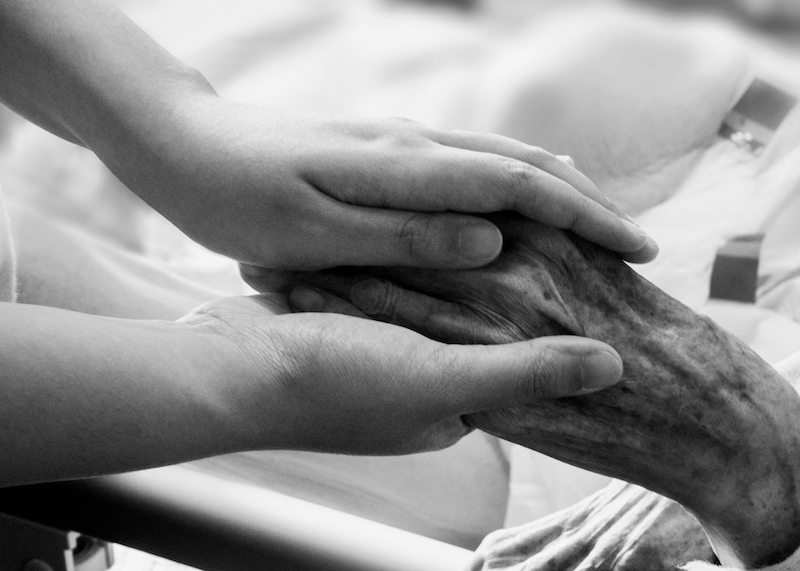
Avoid “Ag shame, you poor thing” messages. Keep it pleasant, chatty and lively. It may illicit a few tears, but overall, it is uplifting. If need be, just sit with the patient, hold their hand and say nothing. Your presence is their comfort.
Maintaining your sanity
Terminal care of a loved one is emotionally draining. There are constant concerns and dreaming up of horror scenarios: “Am I doing the right thing?”; “Am I doing enough?”; “What will I do if…”.
Then there is the physical tiredness, especially if you are also performing physical tasks such as body-washing, dressing, toilet routines and turning in bed.
There are financial concerns. Caring comes with expenses and affordability becomes an issue. Enfolding all of this is the immense sorrow and heartache of impending loss…
Know your limits
So, what to do to maintain your sanity and keep up your strength? As a point of departure, the loved-one carers must realise their own limits. There is no point in grinding yourself into a funk of self-enforced resilience and perseverance. If you crash, you take your loved one with you.
You need to sit down, preferably with a trusted, uninvolved person to identify challenges and concerns. Seek viable, lasting solutions and draw up a schedule of tasks and support functions that includes me-time as well. A structured approach places you in charge.
Get help
Secondly, seek help. All too often family members are happy to leave it to those who took it upon themselves to care. Rope other family members in to give you me-time. They need not be equally involved but find ways in which they can give you a break.
If it is affordable, contract professional carers to assist with the required physical aspects of care. If your loved one is on a medical aid and is approaching the end, consider contracting a home- care professional nursing agency. Most medical aids will cover home nursing for a limited period.
Power of attorney
Thirdly, if the loved one in your care is financially secure, consider obtaining power of attorney to access the loved one’s funds to cover medical and other caring expenses. For your own security, maintain strict records of all expenses incurred; what was funded by your loved one and by yourself.
Part of the team
Lastly, become part of the team. Professional carers and nursing staff often see loved-one carers as “necessary nuisances”. Prove your value in the emotional support you provide to your loved one and gain their respect. After all, you contracted their services on behalf of your loved one…
After the end…
Now you find yourself in an emotional turmoil. Ten minutes ago, at the break of dawn, your loved one started shuddering and gasping. Then became still. You felt for a pulse and there was none. It is over. Your loved one has passed away.
You cry out your anguish and grief, but at the same time, you feel a great burden rolling off your shoulders. You are finally free of your captivity. All that remains is the formalities of death and funeral arrangements. Your conflicting emotions are a rollercoaster.
You pace up and down, aimlessly, crying for your loss but with a sense of great relief. The suffering is over. You feel the urge to tell someone and rush over to a neighbour-friend. She comes to the door bleary-eyed and half asleep. She immediately realises what happened and holds you in her arms without a word. She lets you talk and reminisce.
Slowly you settle down over a cup of coffee. Over the next few days, you function with a sense of calm; heartsore but calm. But be aware. There may arise a flood of grief at any time. Unexpected. Out of the blue. Don’t be frightened. Let it flow. It is part of healing.