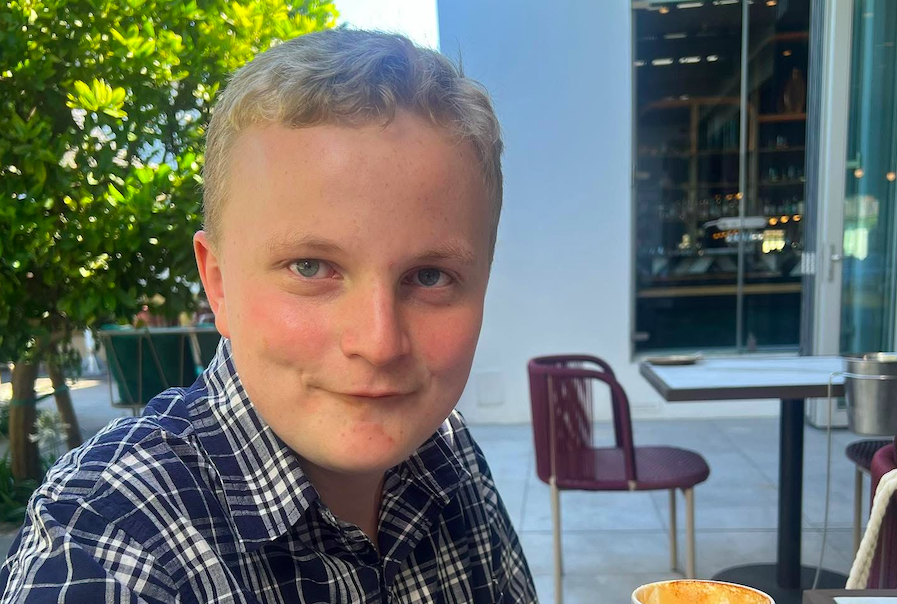
Embodying kindness and celebrating his uniqueness, Matthew shares his experience of life with invisible disabilities
Invisible disabilities often present similar challenges as physical disabilities, like navigating an inaccessible, unaccommodating world, along with its own unique challenges like deciding when to disclose your disability. Diagnosed with autism around age three, Matthew has navigated these challenges for the past 19 years. He has also been diagnosed with Attention-Deficit/Hyperactivity Disorder (ADHD), Obsessive Compulsion Disorder (OCD) and general anxiety, which has presented even more challenges. However, he remains proud and true to himself: “I am proudly on the autism spectrum and proudly have ADHD”.
A good foundation
From age five, Matthew attended a school for learners with autism, which he greatly enjoyed. The teachers were friendly and understood his needs and how to assist him with some of his challenges. With small classes, Matthew received a lot of individual attention. The school didn’t have traditional subjects. Instead, the focus was on life skills like cooking, shopping, making a bed, ironing, washing and how to dress himself.
“All the things he needs every day,” shares Barbara, Matthew’s mother. This helped build a strong foundation for the challenges that Matthew would face later in life. He still considers this some of his favourite years.
“I will always be grateful for that. The younger years were much better than some of the others,” he shares. Specifically, the higher levels of schooling proved challenging. He was in boys-only classes with a lot of staff changes. Fortunately, he preserved and completed his schooling. Now, he is working on his further education with online courses, which suit him better. He can work at his own pace without the noise and distractions of being in a classroom.
Learning acceptance
While Matthew is now very accepting and proud of his disabilities, it took him a while to get there. For a long time, he wanted to be neurotypical. Now, Matthew believes authenticity is the best. He shares: “It is really important that you accept yourself”.
A big part of acceptance is knowing who to listen to. Matthew’s advice to other children with autism is not to listen to the snarky comments: “It’s okay to be autistic. You’re fine just the way you are. Don’t listen to people who make nasty and snarky comments about autism. They don’t know you. They don’t serve you and they don’t serve any purpose in your life. I just ignore them.”
It is a lesson that has been engrained in Matthew since a young age by his mother. Barbara taught him to realise that people like that “are not worth your time or your effort because being angry is a waste of energy”. She always encouraged Matthew to walk away from negative situations or people who were a bad influence on him.
Learning to cope
When Matthew was younger, he would get angry. With multiple disabilities and general anxiety disorder, Matthew has come up with coping strategies to help him calm down when he feels overwhelmed, there is a change or something exciting is happening. He found taking out his frustrations and anger on a boxing bag very helpful when he was young. As he learned to identify his feelings, he started talking about them as a way to process. He continues to work on managing his emotions in healthy ways.
His father, Craig, has also been diagnosed with autism. He has been able to give Matthew some coping strategies, which include stimming, splashing cold water in his face, and ensuring he doesn’t skip meals so that his blood sugar levels remain constant.
Navigating an inaccessible world
For Matthew, being around smokers, having people in his personal space and hand dryers in public bathrooms are common obstacles. He also finds navigating social media challenging. Matthew strongly feels that he should disclose his disability.
However, Barbara argues that people try and take advantage of his kindness. She has raised her concern with how Matthew discloses his disability very early on in conversations with strangers at times. He is unlearning this: “It is important to be careful of who you trust on social media.”
Finding community
Considering the challenges of social media, Barbara wishes for more social groups for people with autism so that individuals like Matthew can socialised in a safe environment where they are understood.
Recently, Matthew has joined an afternoon walking club with his dad. They enjoy this special time together out in the fresh air, away from screens. He mentioned that being part of this group has been amazing: “They have been so kind, so loving and understanding. Joining the walking group is something that I really look forward to doing”.
These regular walks allow him to stay safe, be part of a group, walk at his own pace and chat to others. Socialising is very important to Matthew.
Embodying kindness
Being kind to each other is very important to Matthew who strives to be kind. It is one of his many strengths as Barbara shares: “He is very kind and very funny, but he does obsess about some things. Another strength is that he is very sociable. He can talk to just about anyone. He is too trusting, which might be because of his small caring and nurturing schooling environment. He has been burned a few times on social media. He also over- shares sometimes, which is a normal ADHD thing”.
While he is still learning how to be kind and keep himself safe, Matthew continues to celebrate his uniqueness and call on others to do the same: “We are all unique just the way we are. We shouldn’t be judgmental to each other. We should just be kind.”