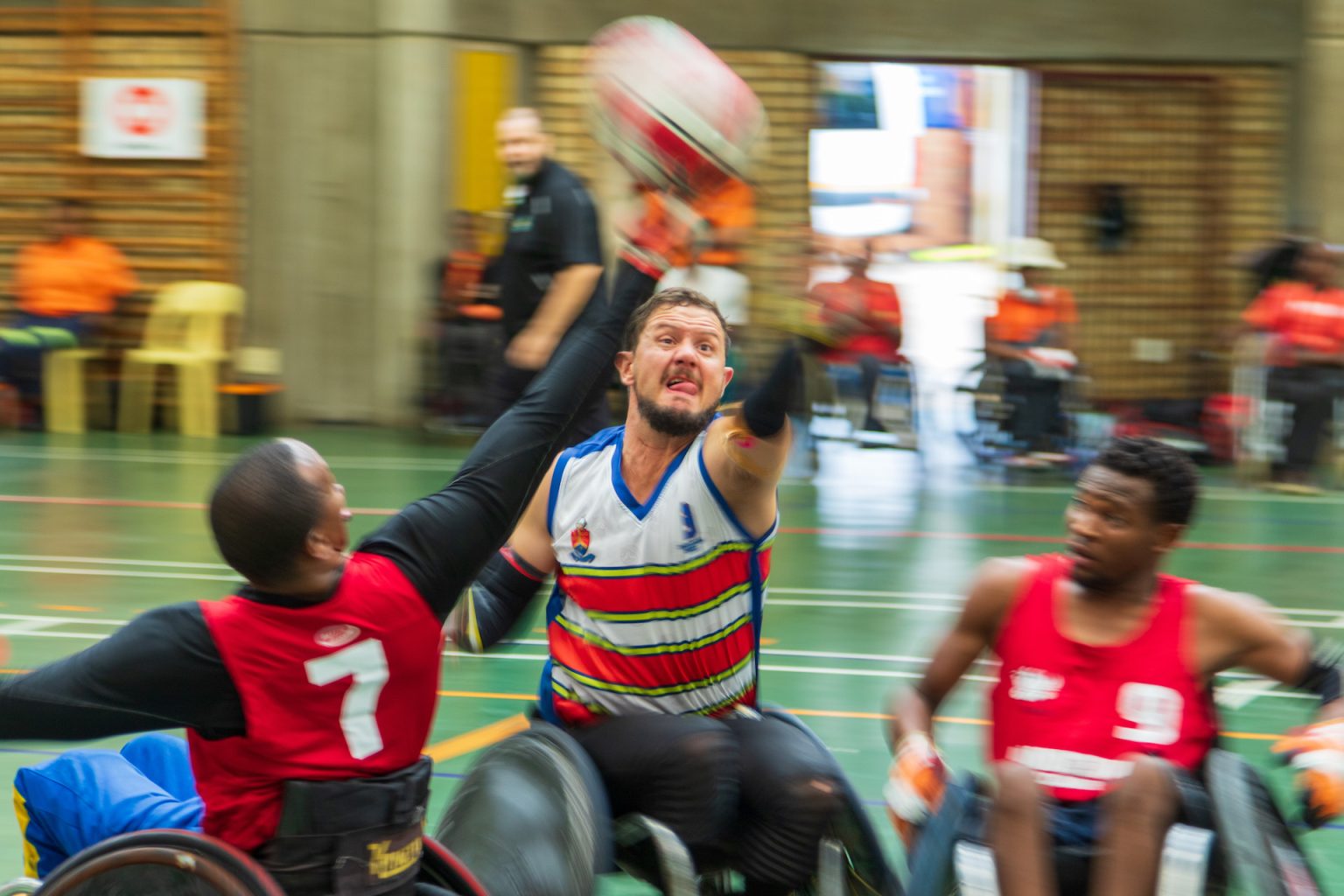
As part of a series profiling wheelchair rugby clubs competing in the South Africa Wheelchair Rugby (SA WCR) league, we head to Pretoria to meet TUKS Wheelchair Rugby Club
TUKS Wheelchair Rugby reaches all the way back to the birth of the sport in South Africa. Originally known as Pretoria Wheelchair Rugby Club, the team was based at Pilditch Stadium in Pretoria West. It was one of the founding clubs when wheelchair rugby took root in 1998. The original squad numbered around 10 athletes.
Those were pioneering days. Purpose-built rugby wheelchairs were not yet available and players took to the court in modified basketball chairs. There was no South Africa Wheelchair Rugby organisation coordinating the game nationally. The survival and growth of the sport depended largely on a handful of committed athletes and local champions willing to build something from scratch.
Pretoria’s place in that history runs particularly deep. Jakkie Pieters, Arthur Piercy and Andre Maree, the three founding members of wheelchair rugby in South Africa, all came from Pretoria Wheelchair Rugby. As national structures began to emerge, Jakkie would become the first chairperson of the organisation that eventually developed into South Africa Wheelchair Rugby.
More than a quarter of a century later, the club that began at Pilditch remains a permanent fixture of the South African game.
Becoming TUKS
The relationship between Pretoria Wheelchair Rugby and the University of Pretoria began taking shape around 2000. A key figure was University of Pretoria lecturer Caroline Rule who helped build momentum towards bringing the team into the university environment.
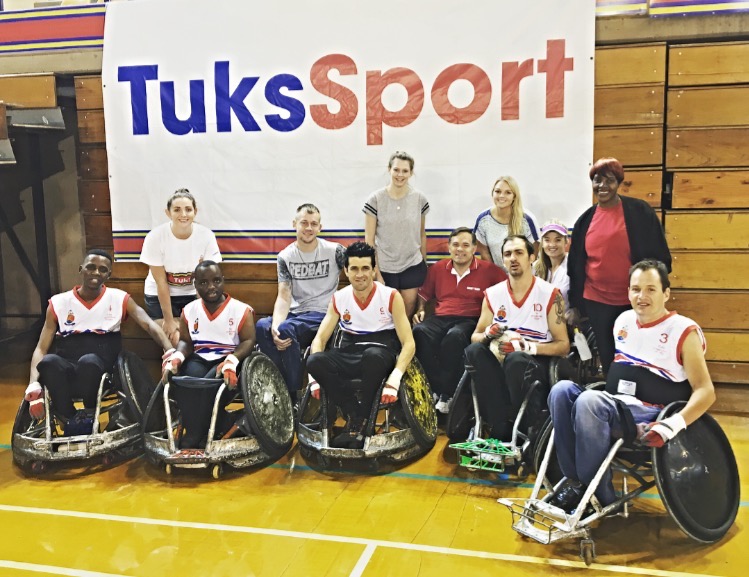
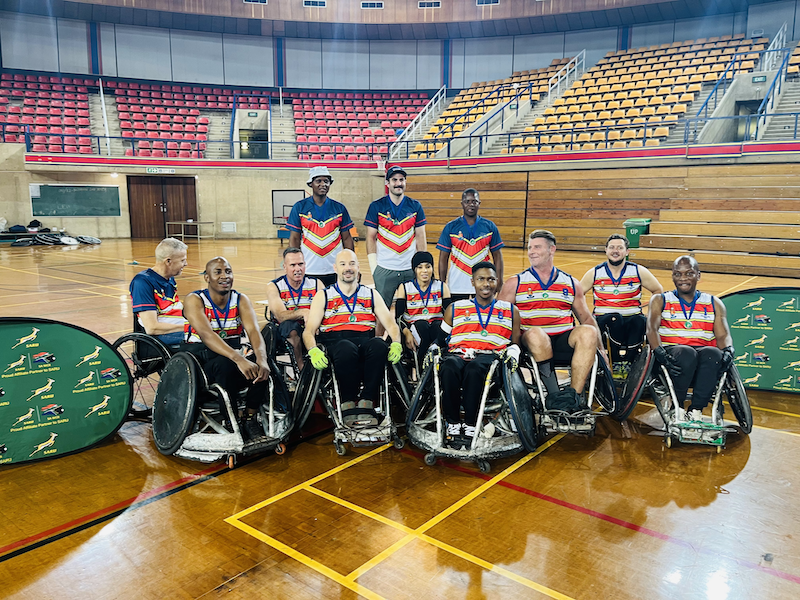
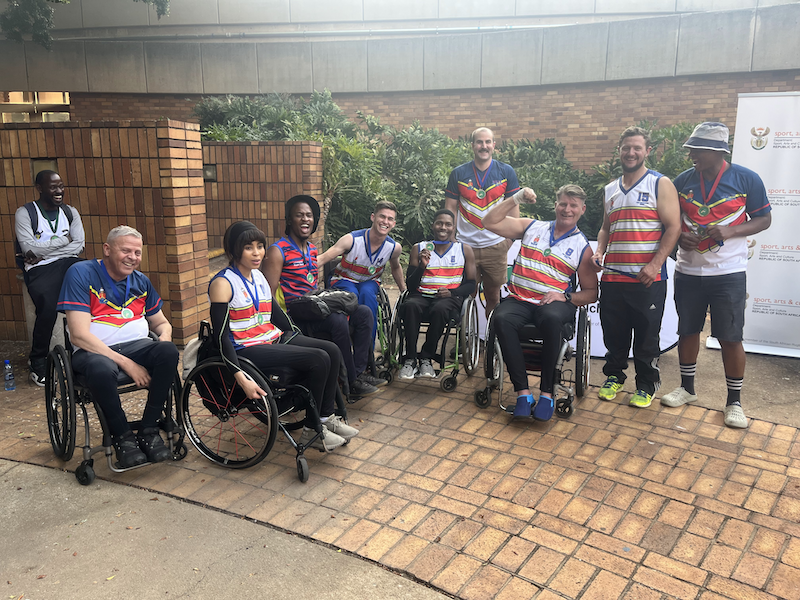
TUKS occupational therapy students also became involved, organising fundraising and creating greater exposure for the sport. One memorable initiative saw Pretoria Wheelchair Rugby take on the Blue Bulls rugby team in an exhibition wheelchair rugby match.
The relationship became formal in 2003 when Pretoria Wheelchair Rugby affiliated with the university under the banner of TUKS Rugby. Former Springbok eighth man and then head of TUKS Rugby, Wynand Claassen, became an important supporter of the fledgling programme. The club gained access to funding assistance, facilities and equipment storage. Wheelchair rugby was also given exposure at TUKS sporting events.
Claassen took a personal interest in the team, regularly attending practices and occasionally joining the athletes on court. Dedicated training and storage facilities at Groenkloof Gymnasium and the LC de Villiers Sports Complex gave the club something especially valuable: stability. The significance of that stability reached well beyond TUKS itself.
Expanding the sport
From 2001, athletes from Filadelfia School in Soshanguve had begun training alongside the Pretoria squad. This created an early development pathway for young athletes with disabilities and helped establish the foundations from which Vikings Wheelchair Rugby Club would later emerge.
TUKS also played an important role in taking wheelchair rugby into other parts of South Africa, including Stellenbosch through Maties, East London through the Bullfrogs, and Natal. A major development initiative in Bloemfontein in 2008 helped establish wheelchair rugby in the Free State. This ultimately contributed to the emergence of Mustangs Wheelchair Rugby Club; one of the dominant clubs of a later era.
Pretoria and later TUKS became a base from which wheelchair rugby knowledge, experience and enthusiasm could spread into other centres. The university environment created opportunities beyond playing the game. Occupational therapy and physiotherapy students became involved as table officials, referees and classifiers. TUKS provided a stable platform from which athletes, officials and expertise could flow into the wider sport. By 2010, the club had grown from its original 10 athletes to more than 20 players fielding two teams.
From contender to champion
As wheelchair rugby expanded nationally between 2003 and 2010, TUKS steadily moved towards the front of the field. The dominant rivalry of the period was largely between Mandeville and the Bullfrogs. However, TUKS was increasingly close behind.
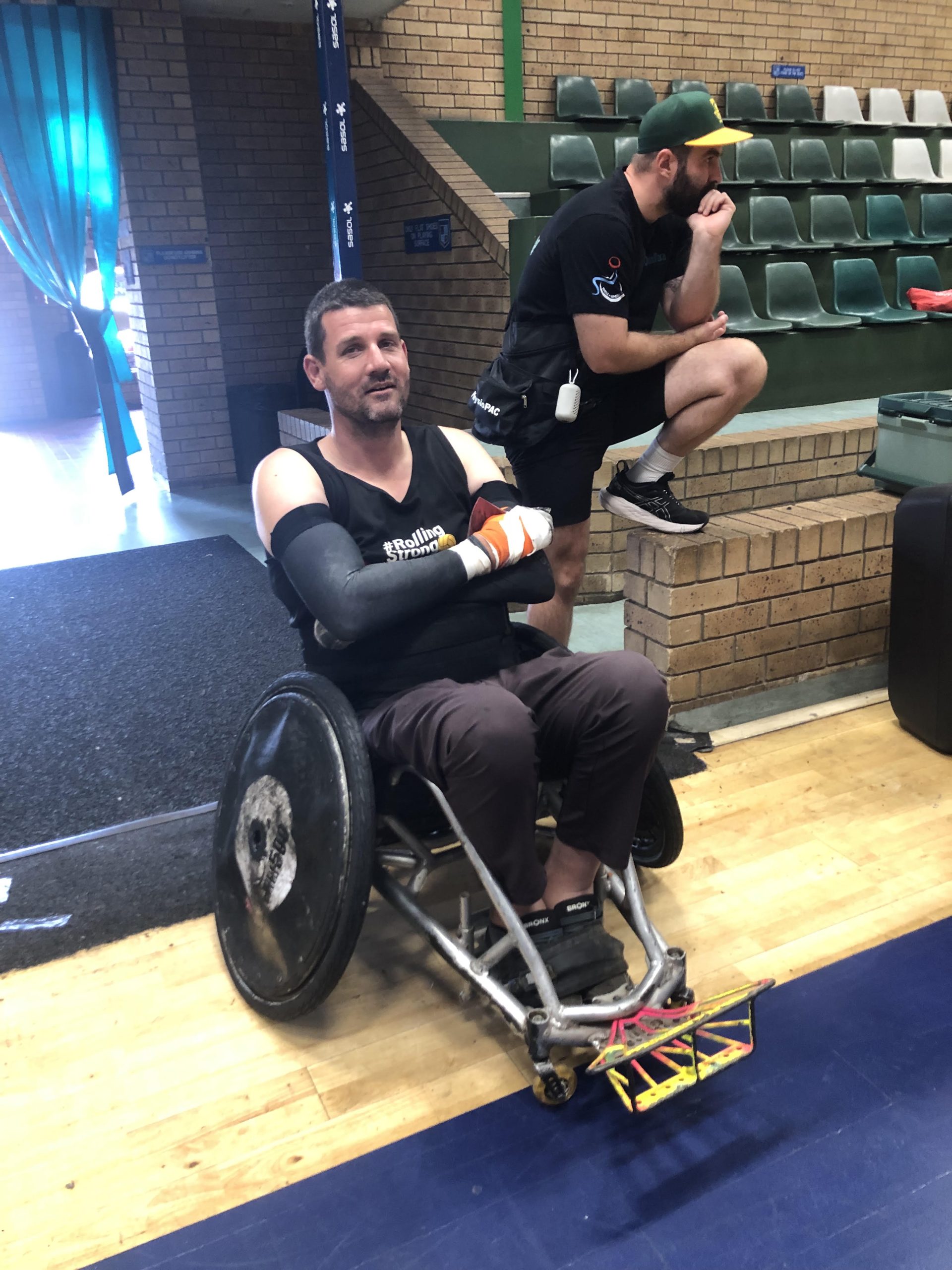
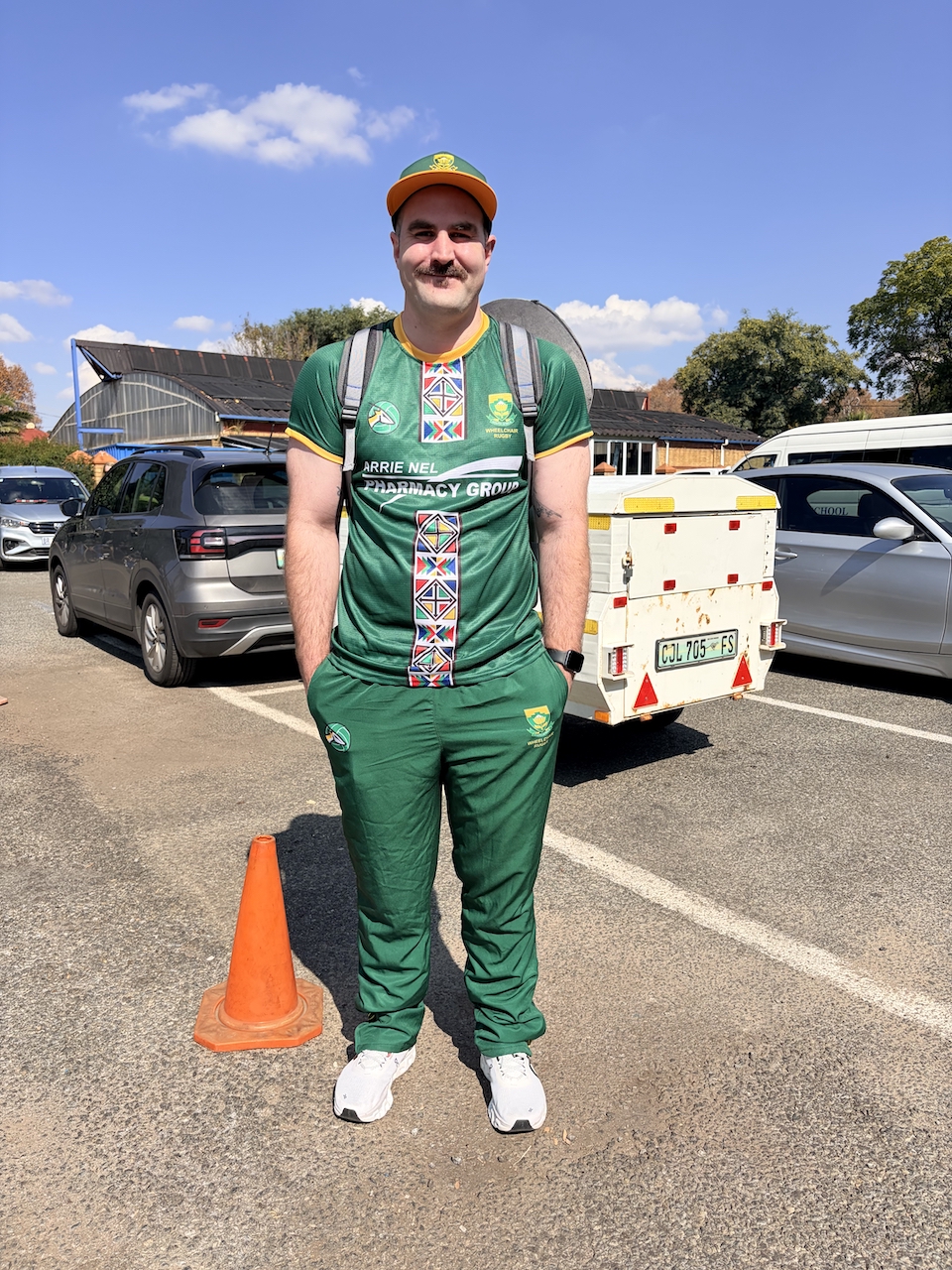
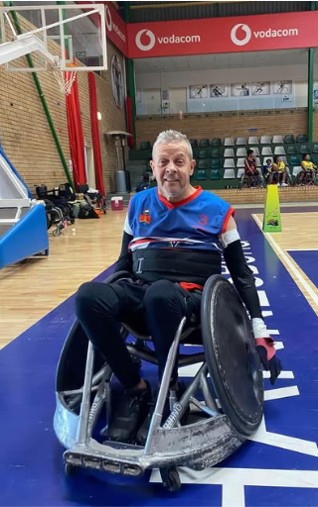
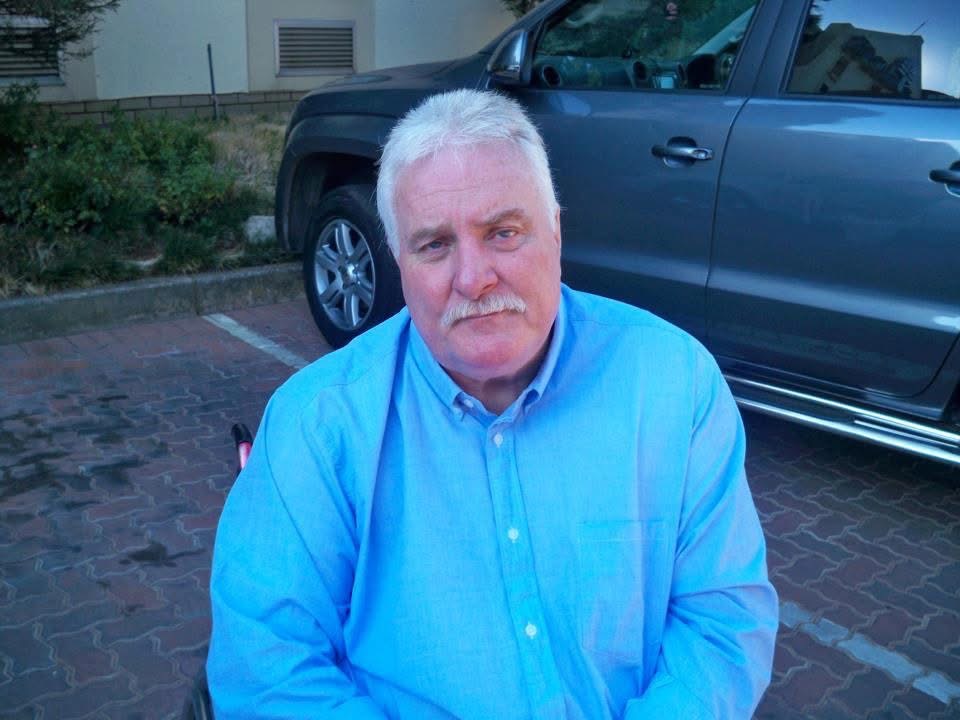
Under Jaco Dorfling, who coached the team from 2006 to 2010, the club continued to mature. Dorfling served as South African National Team coach in 2009. It was an early example of a defining TUKS characteristic: The club was developing not only national players, but national coaches.
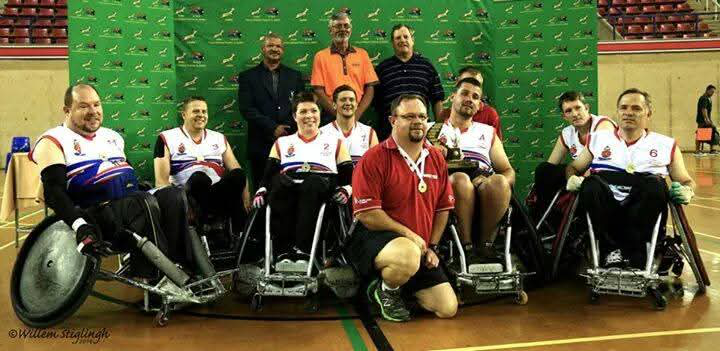
From 2010, TUKS moved into another gear under Coach Kobus van Zyl. By 2012, TUKS had overtaken the dominant Bullfrogs and claimed the national league title. It would hold that position for the next four years, marking an era of TUKS dominance in South African wheelchair rugby.
Finding a way
The 2010 FIFA World Cup temporarily displaced the club from its university training facilities. TUKS had to find another court in the interim for training and practice. For many teams, losing a venue for a year could have threatened their survival. However, the TUKS team made a plan.
With the assistance of Air Force Colonel Gerhard Jansen van Rensburg, the team relocated to Waterkloof Air Force Base where players spent the year training inside an aircraft hangar. It is an unusual chapter in the club’s history, but an appropriate one. Across different venues, coaches and generations of athletes, the underlying story has remained remarkably consistent: TUKS keeps playing!
Production line for green and gold
Few measures demonstrate TUKS’ contribution to South African wheelchair rugby better than the number of national athletes who have passed through the club. That lineage reaches back to the earliest days of the sport and includes: Jakkie Pieters, Andre Maree, Arthur Piercy, Nikkie Coetzee, Clyde Holland, Victor Buitendag, Lucas Sithole, Jeff Yates, Freddie Koch, Lisa Kirkland, Yolande Oosthuisen, Bennie Dorfling, Metz van Wyk, Cat Swanepoel, Andre Fourie, Luan Degenaar, Bonga Khumalo, Okkie Anker and Bennie Erasmus.
It is an extraordinary roll call spanning different generations of South African wheelchair rugby. The same is true of coaching. Following the earlier contribution of Jaco Dorfling, Suzette Muller, assisted by Armand Muller, coached TUKS from 2015 to 2023. The pair maintained the club’s place among the leading teams during an era in which Mustangs emerged as a dominant force in the league. In 2023, Gary Burnard took over as TUKS head coach. He has since also become head coach of the South African National Team.
Today, the connection could hardly be clearer. Around half of the current National Team comes from TUKS. National Captain Bennie Erasmus and Vice-Captain Okkie Anker are both TUKS athletes, while Burnard leads both the club and national coaching structures. TUKS is one of its major feeder organisations for the national team.
Back on top
More than two decades after first affiliating with the University of Pretoria, TUKS remains exactly where it has spent much of its history: Competing at the front of the field. The club claimed the 2025 SA WCR Paralympic-format title, returning to the top of the national standings. It is also a strong presence in the rapidly growing Fives Format, finishing third in 2025.
There is something significant about those results when viewed against the club’s history. The athletes have changed. Coaches have changed. South African wheelchair rugby has grown from a handful of pioneering teams into an organised national league. New formats have emerged and new clubs have risen to challenge the old order, but TUKS is still there.
A special relationship
The partnership between TUKS Wheelchair Rugby and the University of Pretoria has become one of the enduring institutional relationships in South African wheelchair rugby. The university has provided facilities, visibility and organisational support.
In return, the wheelchair rugby programme has contributed to the University’s sporting identity while creating opportunities for students to become involved in disability sport through disciplines such as occupational therapy and physiotherapy.
TUKS Wheelchair Rugby is also an affiliated member of Blue Bulls Rugby, represented within that structure through TUKS Rugby. Together, these relationships have allowed the club to maintain a reliable footprint across Pretoria and the wider Gauteng North region. Connections with rehabilitation facilities and the disability community continue to provide pathways through which people can discover the sport.
Titan on the game
Some clubs are remembered for a particular championship team or a remarkable period of dominance. TUKS has had both. Its greater achievement, however, is endurance. From the three Pretoria athletes who helped found wheelchair rugby in South Africa, through modified basketball wheelchairs at Pilditch Stadium in 1998, the move into the University of Pretoria and the championship years that followed, TUKS has remained a constant presence in the game.
More than 25 years after Pretoria Wheelchair Rugby first took to the court, TUKS remains a national champion and one of the principal pipelines into the South African squad. That combination of history, performance and sustained contribution makes TUKS more than one of South Africa’s founding wheelchair rugby clubs. It makes TUKS a titan of the sport.
For more information or to get in touch with the TUKS Wheelchair Rugby Club contact phone 076 637 3715 or send an e-mail to metzvanwyk95@gmail.com.