Speaking out against inaccessible spaces is the only way to achieve universal access
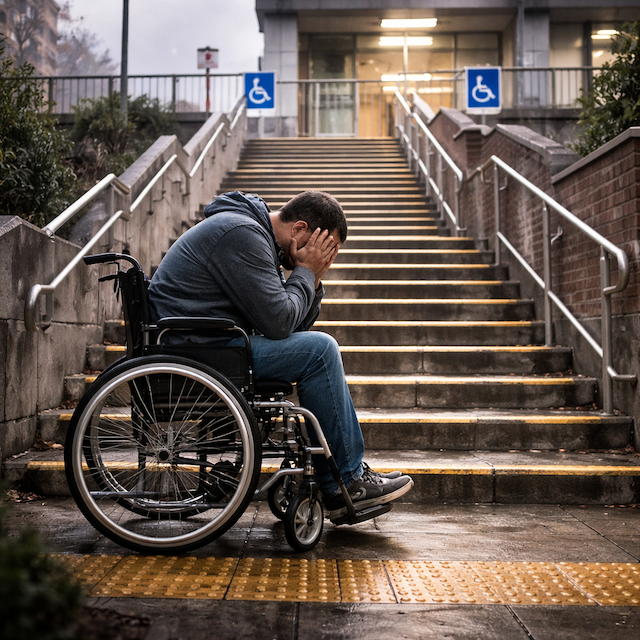
Access is a fundamental right. Yet, many of us still encounter islands of isolation, like too few wheelchair parking facilities, non-compliant toilet facilities, or a ramp so steep it feels like climbing a mountain. These are architectural oversights that create barriers to our independence and participation in society.
This is why Universal Design is vital. Unlike “special access” that feels like an afterthought, Universal Design calls for spaces to be inherently usable by everyone, regardless of ability, without the need for specialised adaptation. Access is built in from the beginning rather than something that is added retrospectively. It is the difference between being “allowed” into a building and being welcomed into it.
Knowing your shield
To be an effective advocate for your rights, you must know the rules of the game. In South Africa, the SABS Part S (SANS 10400 Part S:2025 Ed 04) is the legal standard that designers, architects and developers must follow. It provides the National Building Regulations for accessibility, including:
- Ramp Gradients: Specific slopes (ideally 1:15 or 1:17) to ensure independent mobility.
- Doorway Widths: Minimum clearance of 800 mm to allow for various chair sizes.
- Ablution Facilities: Precise requirements for turning circles, grab-rail heights, and basins and toilet placement in the cubicle.
- Thresholds: Ensuring entrances are flush (no more than a five-millimetre lip).
Role of the watchdog
Architects and developers often treat accessibility as a checkmark exercise. Without the lived experience of a wheelchair user, they may miss the functional reality of their designs. A bathroom might have the right rails, but these may be positioned in a way that makes a transfer impossible.
This is where we come in. As members of the wheelchair-using fraternity, we must become the ultimate expert on the built environment. When we encounter a non- compliant building, we have the power and the responsibility to point it out. We need to up our civil courage if we are to achieve our environment equality.
Advocacy the antidote to complicity
If we remain silent when we encounter a barrier, we inadvertently signal that “close enough” is acceptable. We become complicit in a system that ignores our needs. By standing up and demanding compliance with SANS 10400 Part S:2025 Ed 04, we aren’t just asking for a favour, we are enforcing the law.
Our mobility is our freedom. Every time we challenge a non-compliant space, we pave the way for ourselves and the next person. Let’s ensure that South Africa is built for every citizen with no one left at the bottom of the stairs. You are welcome to inform QASA by e-mail when you encounter such discrimination and obstacles on info@qasa.co.za.