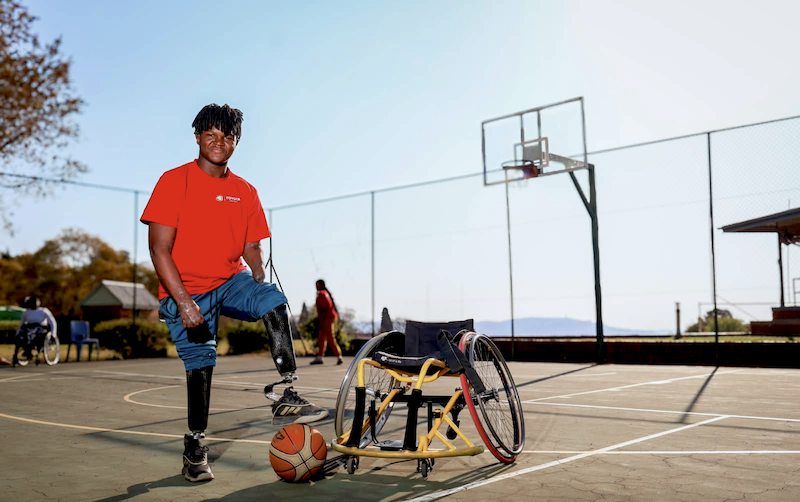
The slow decline that comes with Friedreich’s Ataxia has proven challenging, but George Louw has found a silver lining
As a bit of a clumsy child, I wasn’t very good at sport; always tripping over every obstacle in my way. At the age of sixteen, my parents became concerned about my broad-based gait. They took me to an orthopaedic surgeon who diagnosed me with Friedreich’s Ataxia, a rare disease that damages nerves in the spinal cord and the cerebellum of the brain. This results in a mobility impairment that can worsen over time.
As this was a neurological diagnosis, my parents took me to a neurologist who then made an alternative diagnosis: Arnold Chiari syndrome (herniation of the cerebellum through the opening in the back of the scull that allows the spinal cord to connect with the brain). A week after I finished my matric examinations, I underwent fairly serious brain surgery.
As you can imagine, this was a painful and traumatic experience with a protracted recovery period during which I had to learn to walk from scratch. Once I recovered, it was found that the surgery had no impact on my condition and was totally unnecessary!
At that time, the early 1980s, MRIs came into vogue and my neurologist decided to give it a go. I was subjected to the banging, clanging and other outlandish noises during an hour of incarceration in an MRI tomb. The finding was early atrophy of my spinal cord.
Clinically, the fallout was the loss of the ability to orient position in space from my knees down, which was the reason for my clumsiness. Friedreich’s Ataxia was proclaimed as the most likely cause. Just to be sure, I was subjected to a zillion blood tests to exclude other possibilities. With these all negative, we settled on Friedreich’s.
By now I was in my fourth year in medical school and just married my wife of the past 51 years. It was at this time that I received advice that kept me going all these years and still holds true.

A neurologist at the (then) Coronation Hospital sat me down and said: “Look, we know three things about this condition. One, it is progressive, so it is going to get worse with time. Two, it is highly unlikely to be passed on to your future children; and three, there is absolutely nothing we can do about it. So, stop being a patient and go and live your life to the best of your ability.”
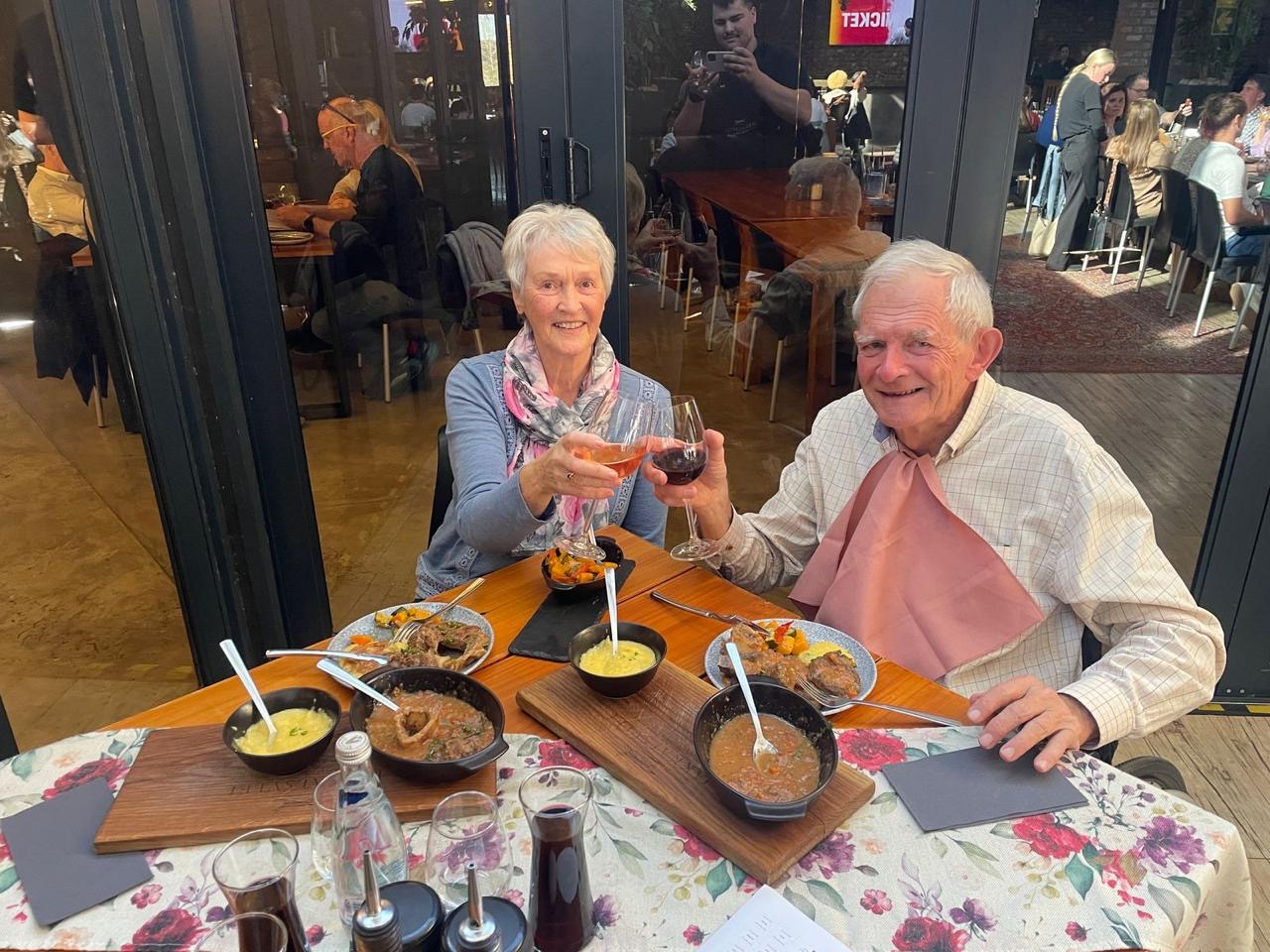
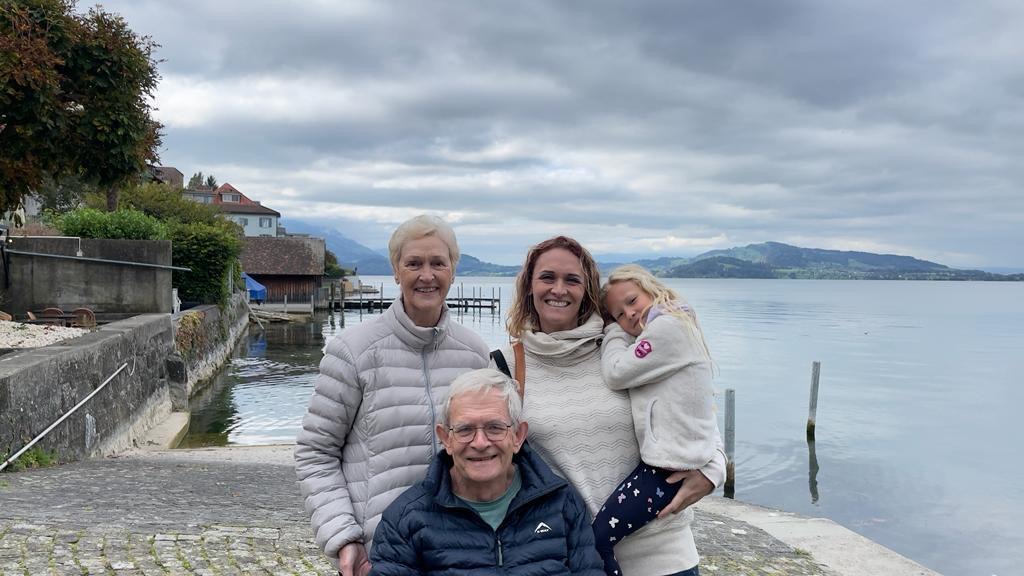
That is exactly what I did for the past 51 years, now happily retired with my wife. We have three middle-aged children and eight grandchildren who are our pride and joy.
Slow Decline
Navigating life with Friedreich’s Ataxia was no bed of roses. The biggest challenge was, and still is, that there is no new norm to settle into. You drop a notch and loose certain abilities. So, you adapt to the changes.
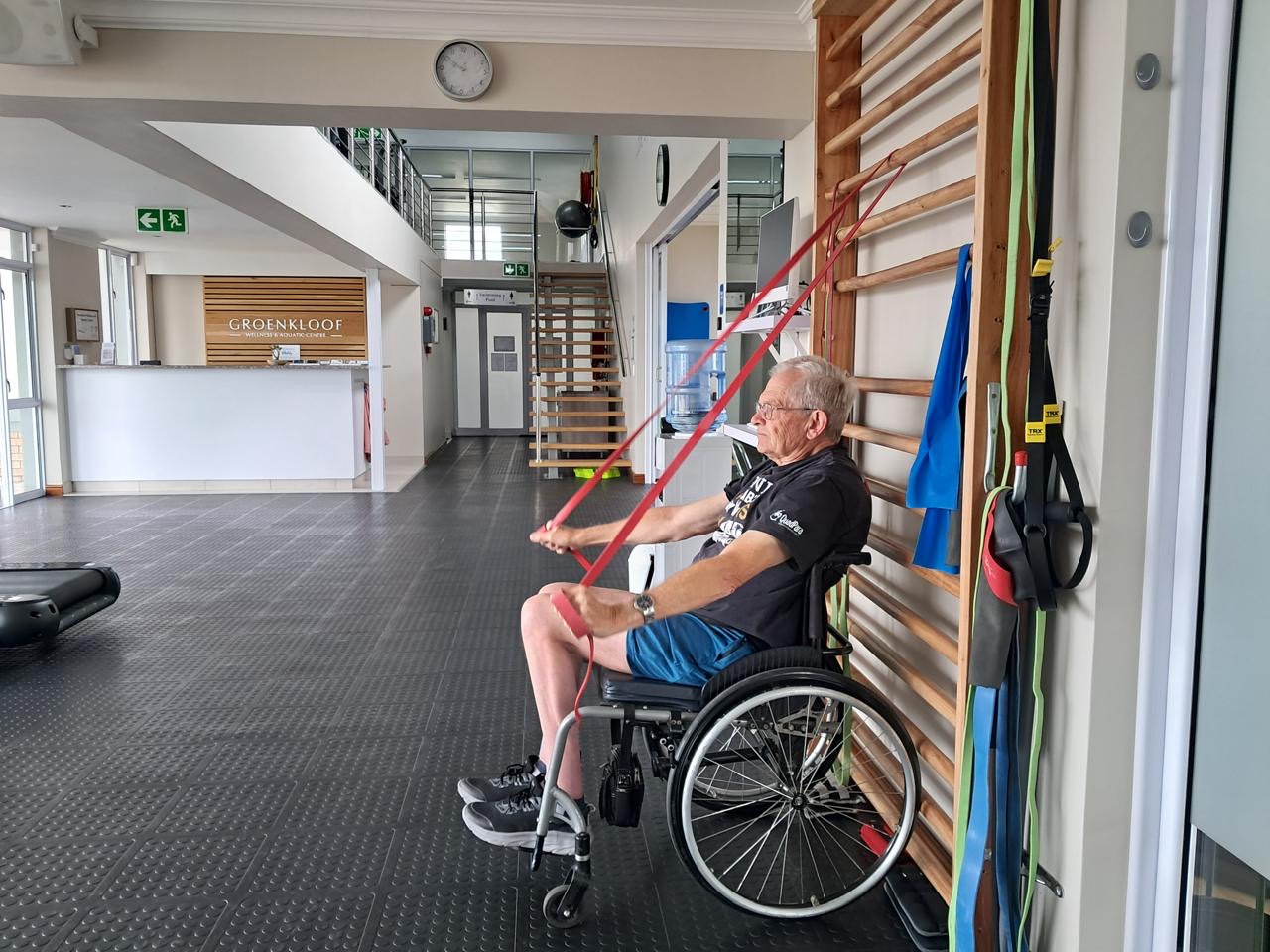
After a few months (sometimes years), all of a sudden, more abilities just become impossibilities and you have to readapt to new norms with new challenges. I migrated from free walk to a single walking stick to two sticks to a walking frame and finally, for the past 20 years, to a wheelchair.
It wasn’t only the progressive loss of mobility that challenged me. Even worse was the impact on my bladder and bowel function. In fact, it was my tendency to urge incontinence that drove me into a wheelchair. Ambulatory sphincter control became an oxymoron.
I was introduced to adult incontinence wear and Mr. IP Inbottle. As time progressed, sleave catheters with urine bags became a way of life. They are very cumbersome but it relieves anxiety, especially where toilet accessibility is an issue.
My latest and current challenge was confirmed by MRI in May of this year. The atrophy of my spinal cord has progressed to my cervical (neck) spine with fallout to the Brachial Plexus (the nerve bundle that serves my arms and hands).
I am on my way to quadriplegia. Currently, only the fine movements of my fingers are affected. I write with a writing aid, struggle with buttons and eat with a spoon. Yet, this is not a doom-and-gloom article!
Silver Lining
In the early years, I became very despondent and anxious as the goalposts continued to shift. People prayed for me and I subjected myself to one or two hair-brained treatments, all to no avail except for temporary escalations of despondency when they failed.
Of late, I have made peace with myself and live my life one day at a time with my God. About Godly healing, I was given a wonderful perspective. There are three types of healing: Physical cure of the affliction; spiritual healing; and social healing.
A physical cure would be curing the affliction temporary, because when you die, the cure dies with you. Spiritual healing requires you to entrust your soul to God and building a relationship with Him, which has eternal value.
Finally, social healing is about the impact of your faith and fortitude on those who live and work with you. You may light a fire of faith where previously there was none. Again, the value-gain is eternal.
If I had a choice, I would choose the eternal over temporary every time. If God chooses to use my physical deterioration to build a resilient faith into my soul, I live with the knowledge that He will be with me every step of the way and that, although He will stretch me, He will not test me beyond my capacity. I am happy and I am at peace.