
Shoulder pain is common, but doesn’t have to be inevitable for wheelchair users. Jenna Loughor-Clarke provides some insights
Shoulder pain is one of the most common challenges faced by wheelchair users. As the arms take on the role of mobility, they are used repeatedly throughout the day for pushing, transfers and daily activities.
Over time, this can place a large amount of stress on the shoulder joints, leading to pain, fatigue and even injury. The good news is that with the right strategies, shoulder pain can often be prevented or reduced.
Why shoulder pain happens
Unlike the legs, the shoulders are not designed for constant weight-bearing and repetitive propulsion. Wheelchair users rely heavily on their upper body, which can lead to overuse of the muscles and joints.
Poor posture also plays a big role. Sitting in a slouched position or having an incorrect wheelchair setup can place extra strain on the shoulders. In addition, weak core muscles can reduce stability, forcing the shoulders to work even harder.
Over time, this combination of overuse, poor alignment and muscle imbalance increases the risk of pain and injury.
Ways to prevent shoulder pain
Small daily habits can make a big difference in protecting your shoulders, including:
- Improve posture: Sit upright with rounded forward.
- Check your wheelchair setup: Ensure your wheelchair is correctly fitted to reduce unnecessary strain.
- Use efficient pushing technique: Use long, smooth pushes instead of short, repetitive ones.
- Take regular breaks: Allow time for your muscles to recover throughout the day.
Strength and mobility matter
Strengthening and stretching are key to keeping the shoulders healthy. These exercises can be done at home using a resistance band or light weights:
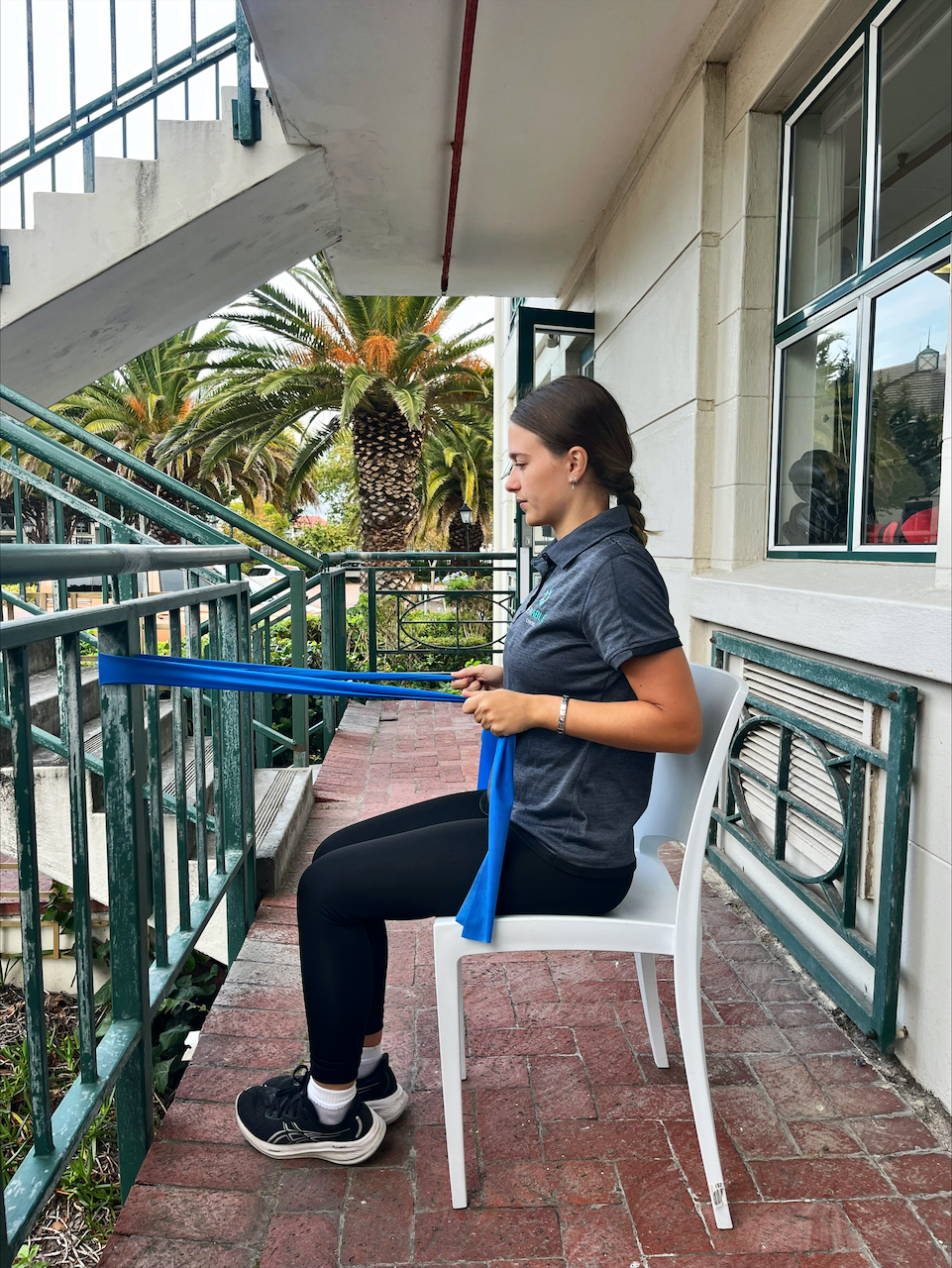
Resistance band rows
- Sit upright and loop a band around a stable object.
- Pull the band towards your chest, squeezing your shoulder blades together.
- Slowly return to the start.
- Repeat 10 to 12 times for two or three sets.
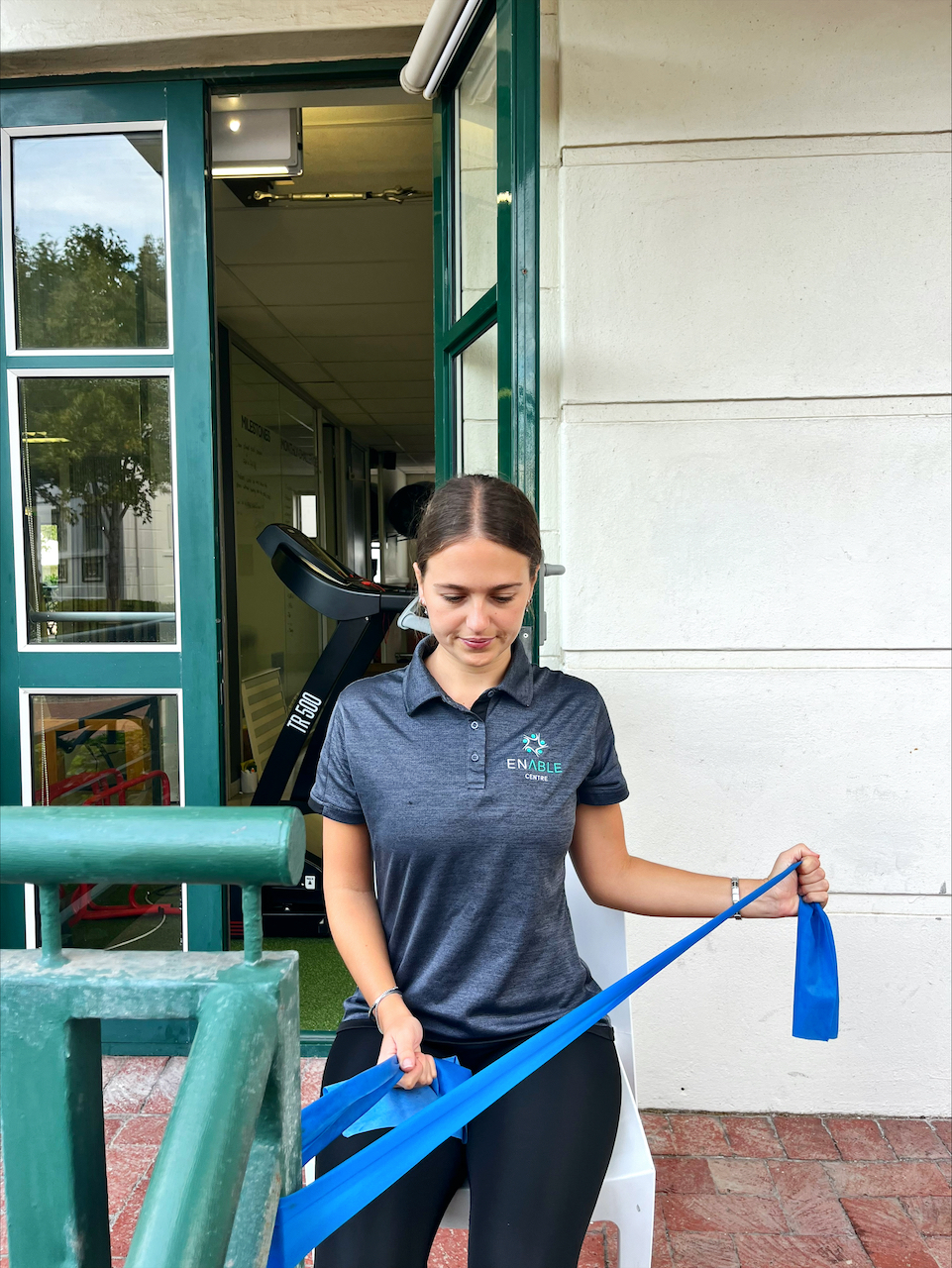
External rotation (rotator cuff)
- Keep your elbow close to your side, bent at 90°.
- Rotate your forearm outward against the band.
- Control the movement back.
- Repeat 10 to 12 times per arm for two or three sets.

Shoulder blade squeezes
- Sit tall and gently squeeze your shoulder blades together.
- Hold for three to five seconds, then relax.
- Repeat 10 to 15 times.

Chest stretch
- Place your arm against a wall or doorway.
- Gently rotate your body away until you feel a stretch in the chest.
- Helps counteract rounded shoulders.
- Hold for 20 to 30 seconds for two to three sets.
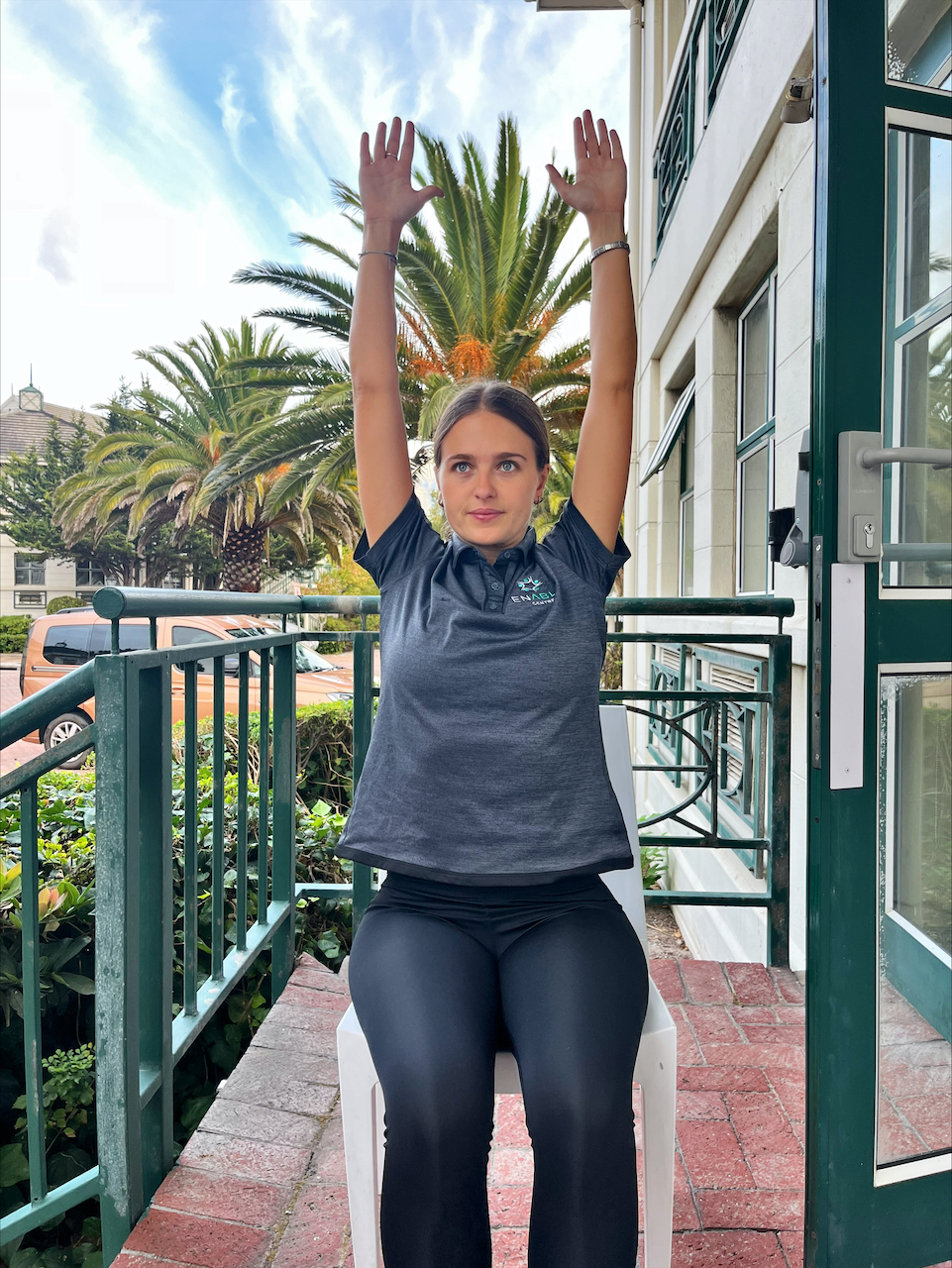
Seated overhead reach
- Reach both arms overhead as far as comfortable.
- Keep movement slow and controlled.
- Repeat 10 to 12 times for two or three sets.
These exercises help strengthen and stretch the upper back and shoulder stabilisers, which reduces strain on the joints and improves posture.
Listen to your body
Pain is a signal that something needs attention. If you experience ongoing discomfort, it is important to address it early. Ignoring pain can lead to more serious injuries over time. Consulting a Physiotherapist or Biokineticist can help identify the cause of pain and provide a personalised management plan.
Shoulder pain is common among wheelchair users, but it is not inevitable. By improving posture, using proper techniques and maintaining strength and mobility, you can protect your shoulders and stay active for longer.